
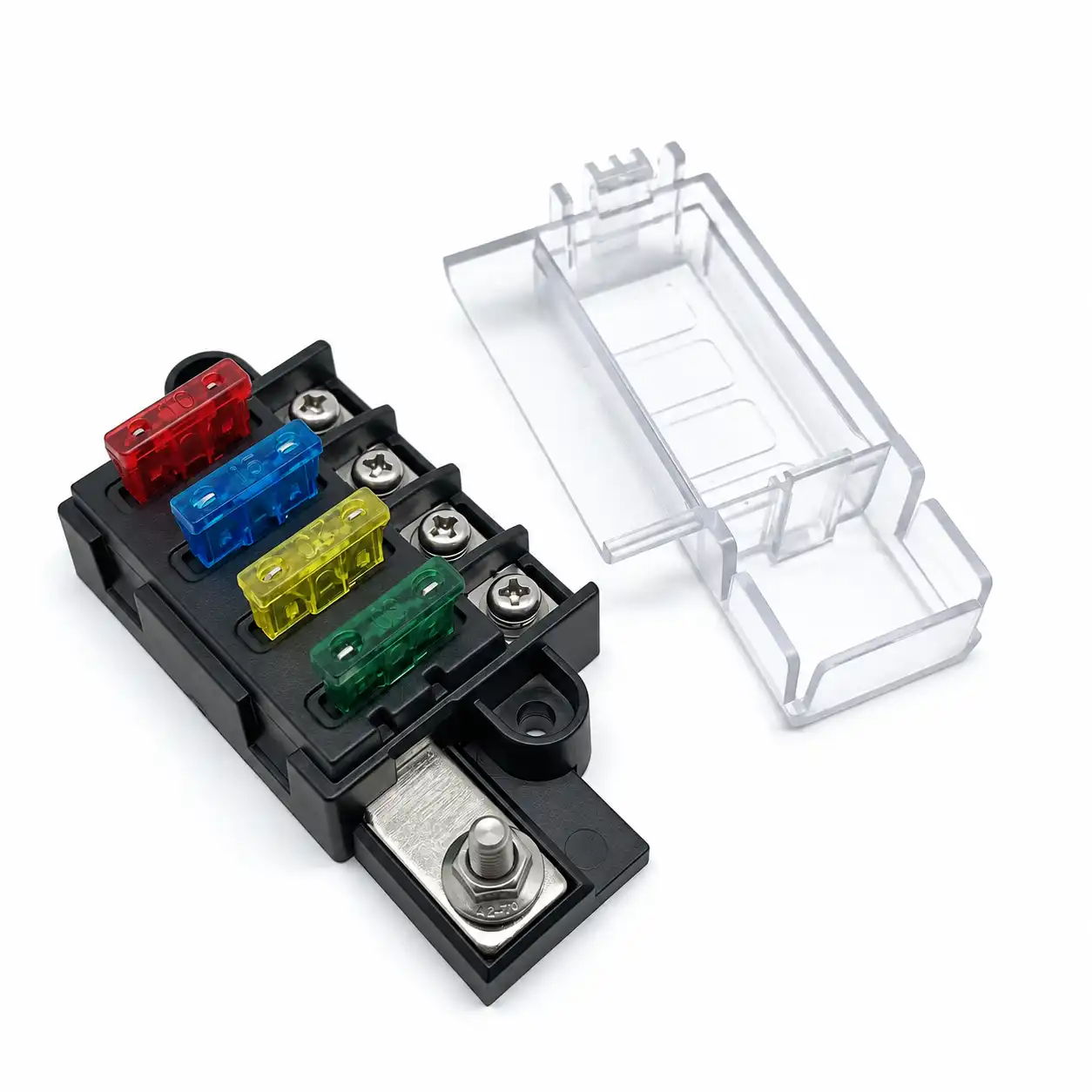
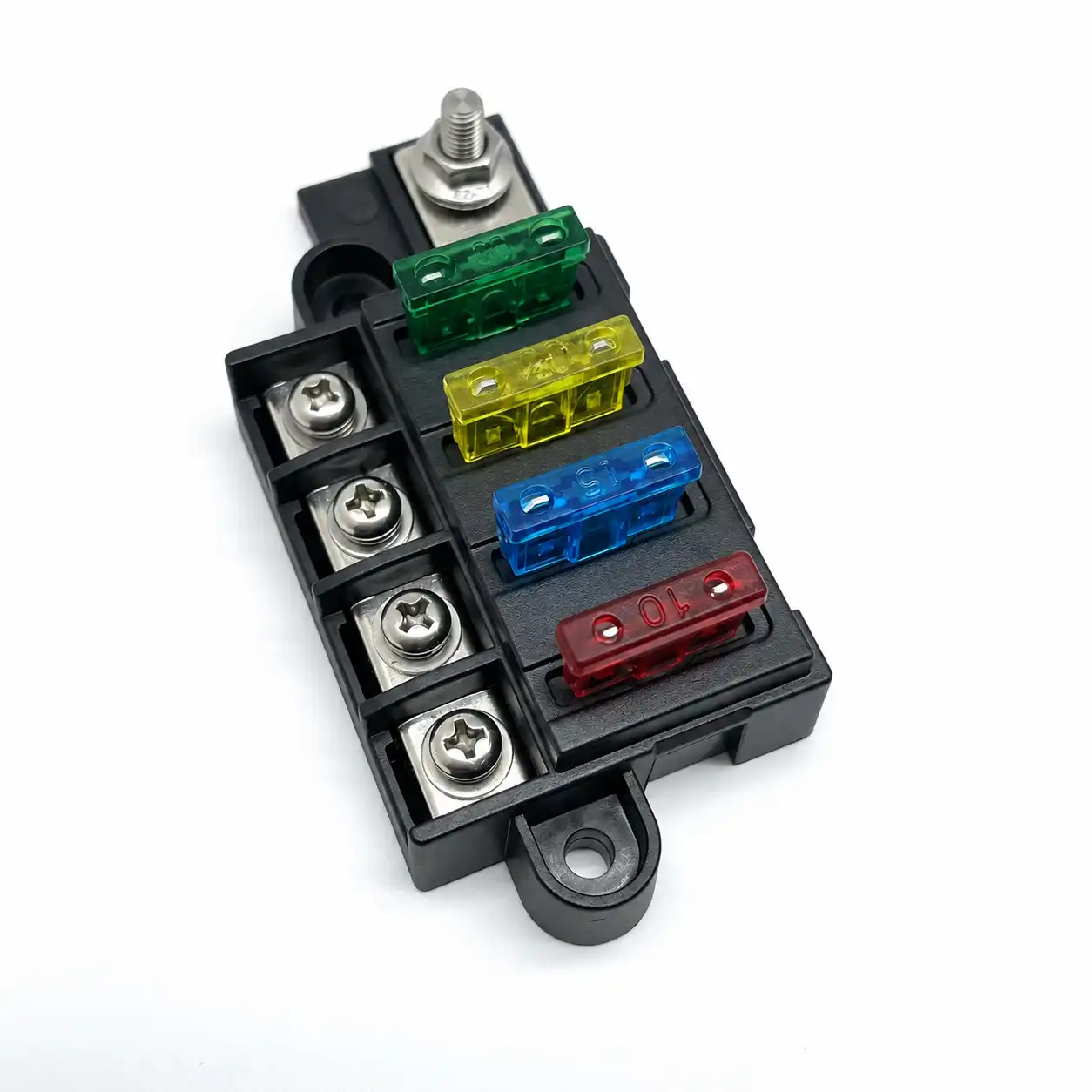
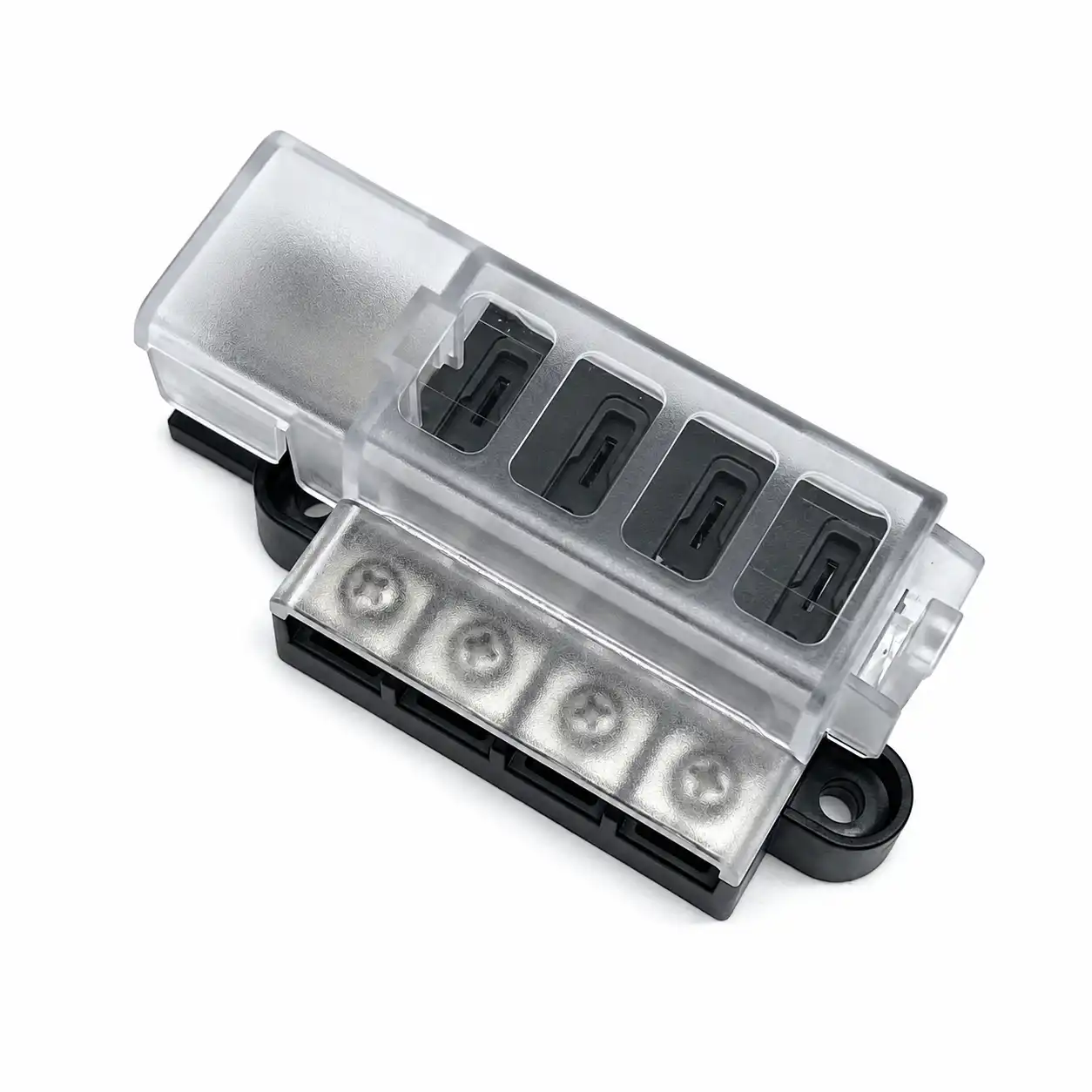
CZY-FB01 is a 4 way ATO/ATC blade fuse block designed to distribute one DC power input across four individually fused branch circuits.
It supports systems up to 32V DC, with a maximum input current of 100A and up to 30A per circuit.
The fuse block features a plastic housing and stainless steel screws for organized multi-circuit DC power distribution.
B2B inquiries are normally answered within one business day.
The CZY-FB01 is a 4 way blade fuse block designed to distribute one DC power input across four individually fused branch circuits. It uses standard ATO/ATC blade fuses, allowing each connected circuit to have separate overcurrent protection.
The fuse block supports DC systems up to 32V, with a 100A maximum input current and a 30A maximum current per circuit. Its four-circuit layout is suitable for organized low-voltage DC power distribution in vehicle electrical systems, auxiliary equipment and other multi-circuit installations.
| Item | Specification |
|---|---|
| Model | CZY-FB01 |
| Product Type | 4 Way Blade Fuse Block |
| Number of Circuits | 4 |
| Compatible Fuse Type | ATO/ATC Standard Blade Fuse |
| Maximum Input Voltage | 32V DC |
| Maximum Input Current | 100A |
| Maximum Current per Circuit | 30A |
| Housing Material | Plastic |
| Screw Material | Stainless Steel |
| Electrical Configuration | Common Input / 4 Fused Branch Circuits |
This 4 way blade fuse block is designed for low-voltage DC systems where several electrical loads need to be supplied from one common power source while remaining individually protected.
The CZY-FB01 uses one common power input to supply four individual fuse positions. Each branch circuit has its own ATO/ATC blade fuse position, allowing the connected loads to be protected separately rather than relying on one fuse for all downstream circuits.
The fuse block features a plastic housing and stainless steel screws. Its centralized four-circuit layout helps simplify wiring where several accessories share the same DC power source.
Power enters the fuse block through the common input and is distributed to four separate branch circuits. Each branch passes through its own blade fuse before supplying the connected load.
If an overcurrent condition occurs on one protected branch and its fuse opens, the remaining circuits can remain separately protected by their own fuses. This is one of the main advantages of using a multi-circuit fuse block instead of protecting several loads with a single fuse.
The 30A maximum per circuit is the maximum current rating of each circuit position. It does not mean that every position should use a 30A fuse.
The fuse rating for each branch circuit should be selected according to the connected electrical load, conductor size and circuit protection requirements. A circuit may therefore require a fuse rated well below 30A.
The complete electrical design must also remain within the 100A maximum input current of the fuse block.
An inline fuse holder protects a single circuit and can be a practical choice for isolated loads. When several accessories require separate protection, however, using multiple individual fuse holders can make the wiring system more difficult to organize.
A 4 way blade fuse block brings four protected branch circuits together at one distribution point. This makes individual fuses easier to locate and provides a more centralized layout for multi-circuit DC wiring.
A four-circuit fuse block is useful when several electrical loads share the same main DC power source but require independent branch protection.
Typical examples include multiple accessory, lighting or auxiliary circuits installed in a vehicle or other low-voltage DC electrical system.
CZY-FB01 is designed for standard ATO/ATC blade fuses.
No. The 30A value is the maximum current rating per circuit position. The actual fuse rating should be selected according to the load, conductor size and circuit protection requirements of each individual branch.
No. The fuse block has a maximum input current of 100A, while each individual circuit has a maximum current rating of 30A.
The fuse block is rated for systems up to 32V DC, so 12V and 24V DC systems fall within the confirmed voltage limit. The complete circuit design and connected loads must still meet the applicable electrical requirements.
A fuse block centralizes several protected circuits in one location, helping organize multi-circuit wiring and making individual fuses easier to identify and service.
Cozy Electronics provides OEM and ODM support for automotive electrical components, circuit protection products and custom electrical assemblies. Buyers can provide the system voltage, number of circuits, expected branch current, fuse requirements and application information for project evaluation.
Contact Cozy Electronics for product details, sourcing requirements and OEM/ODM project inquiries.