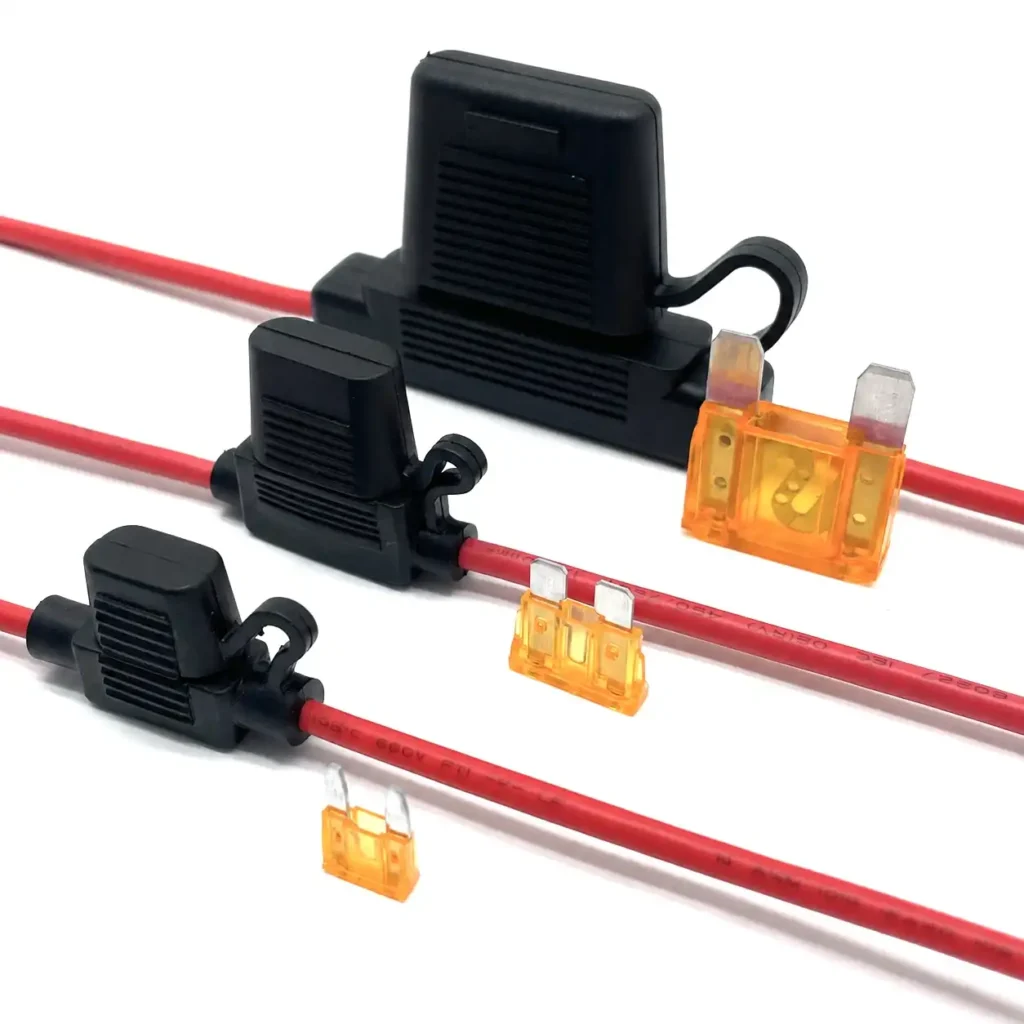
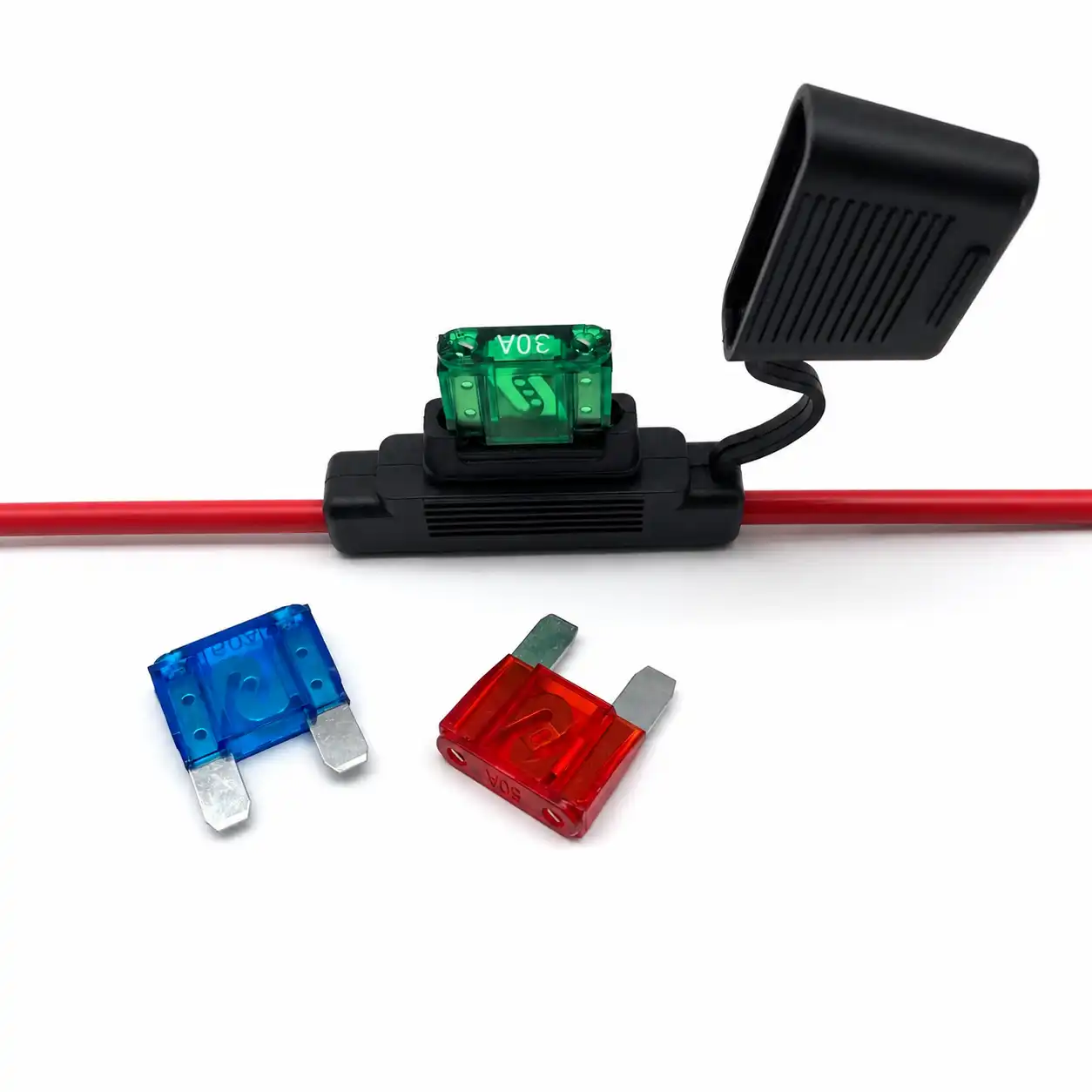
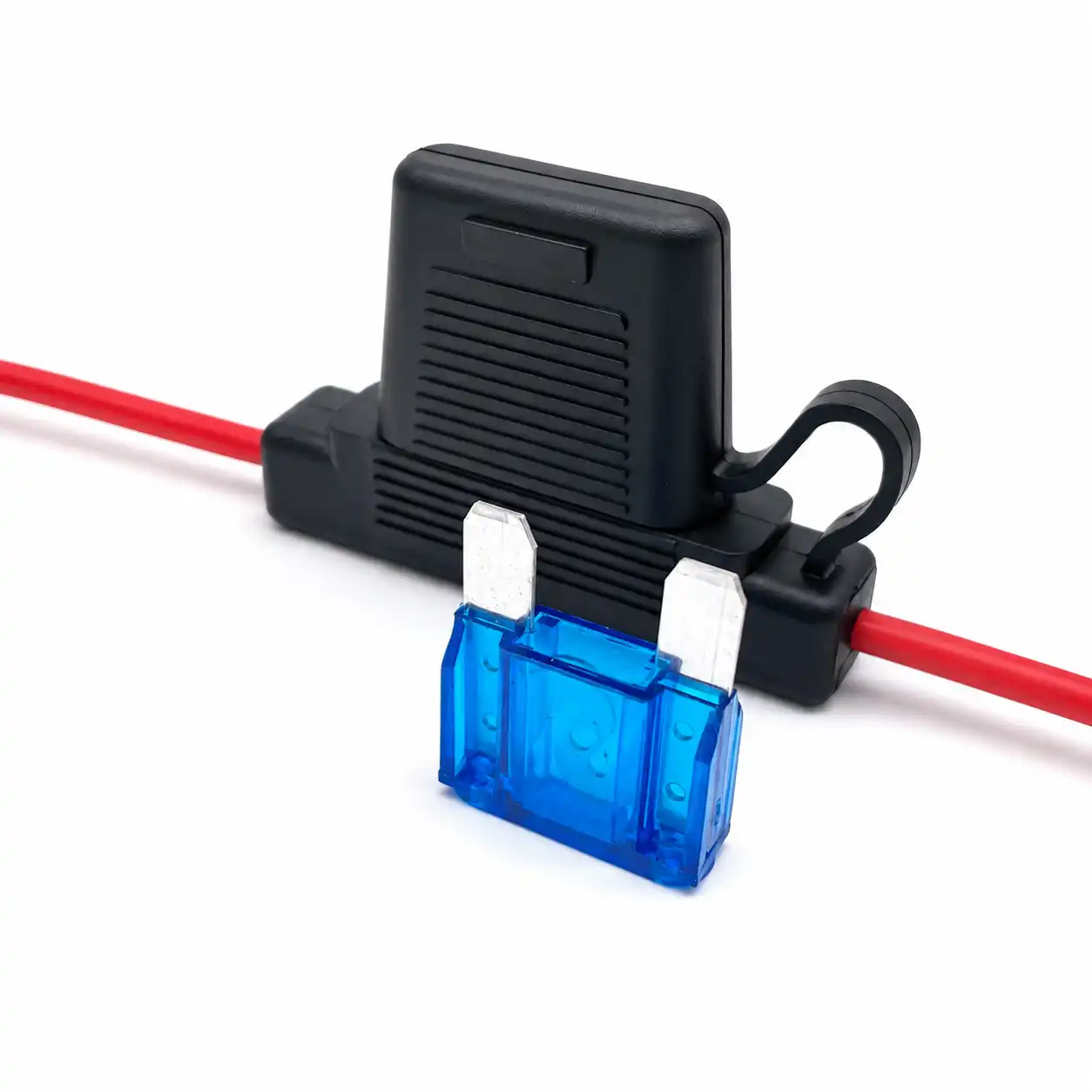
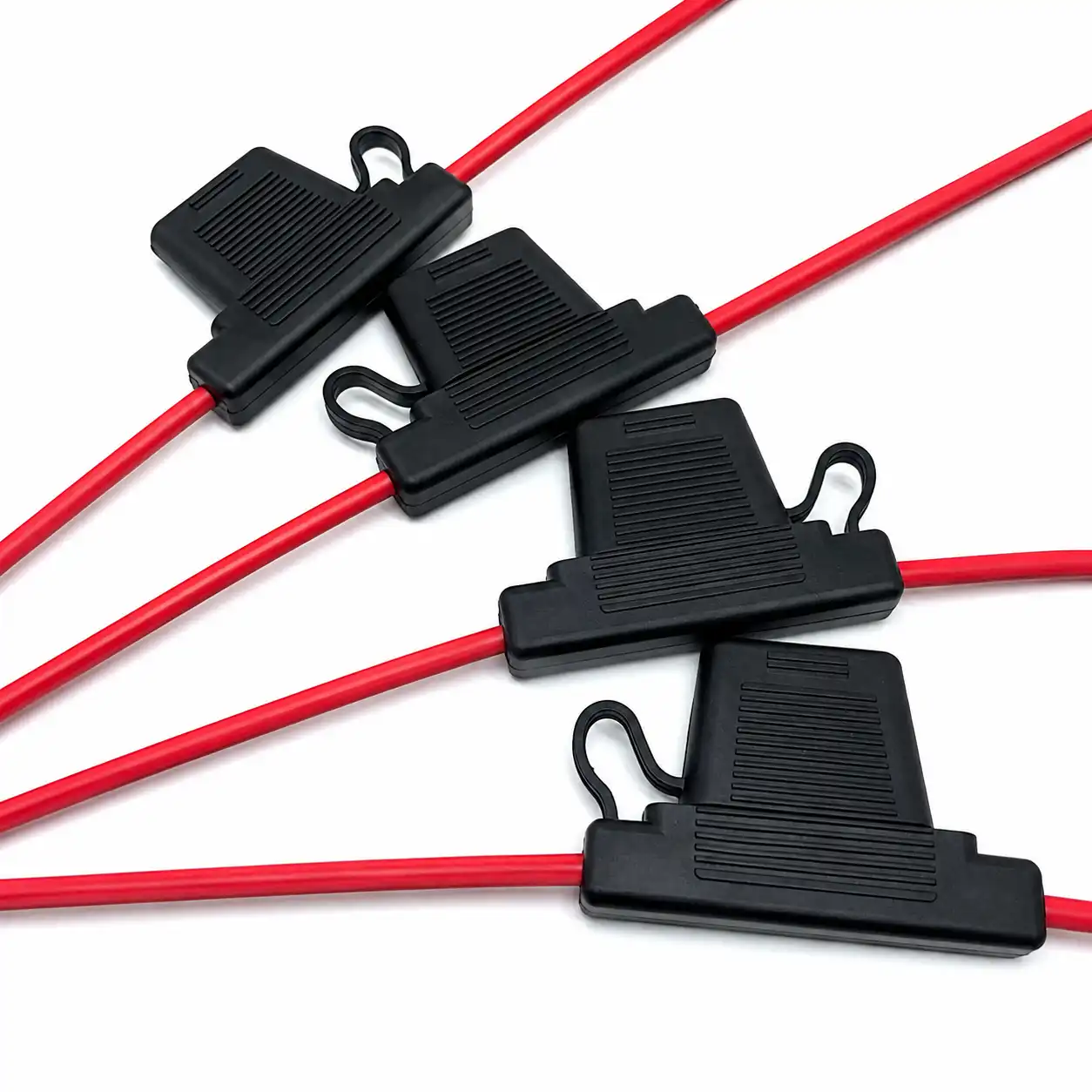
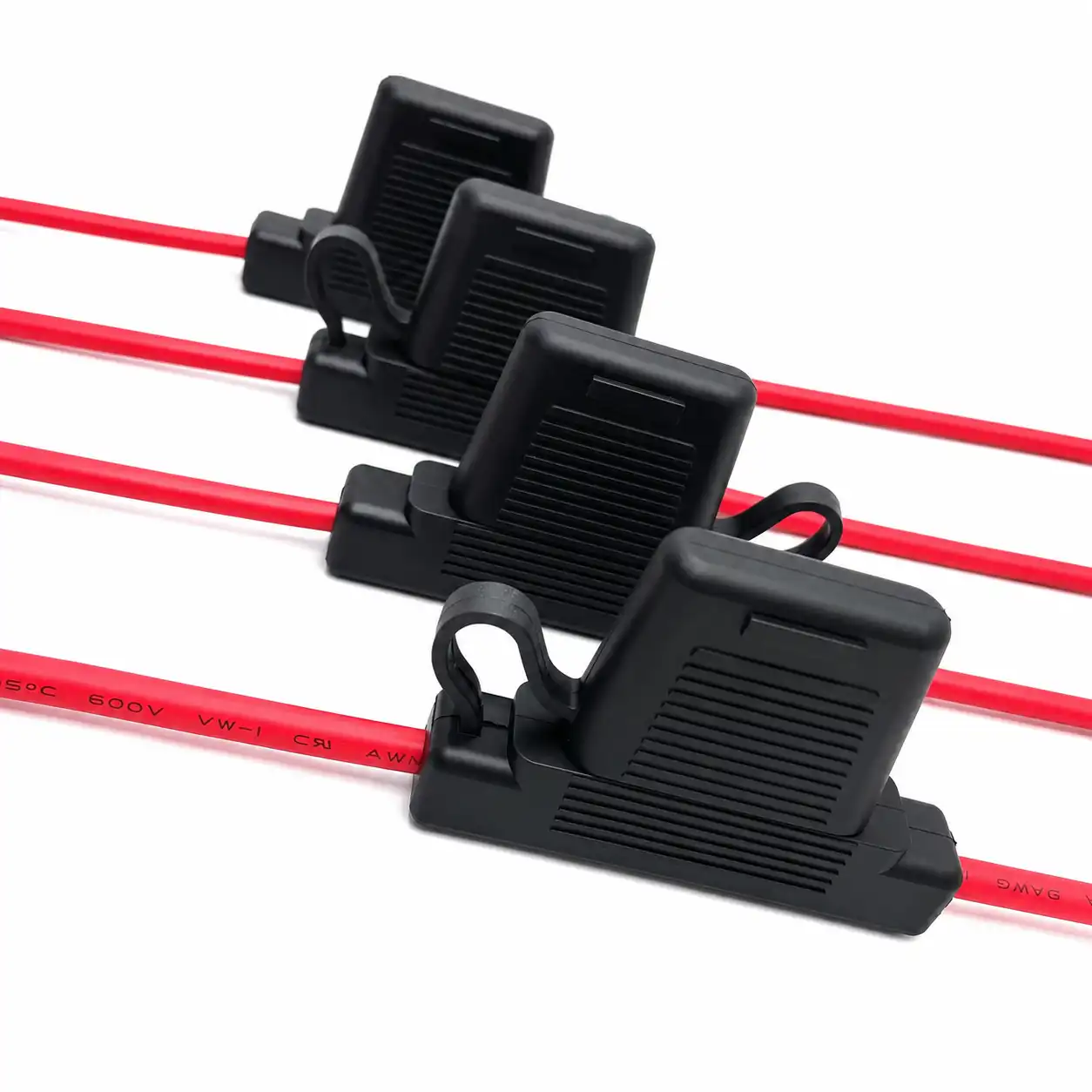
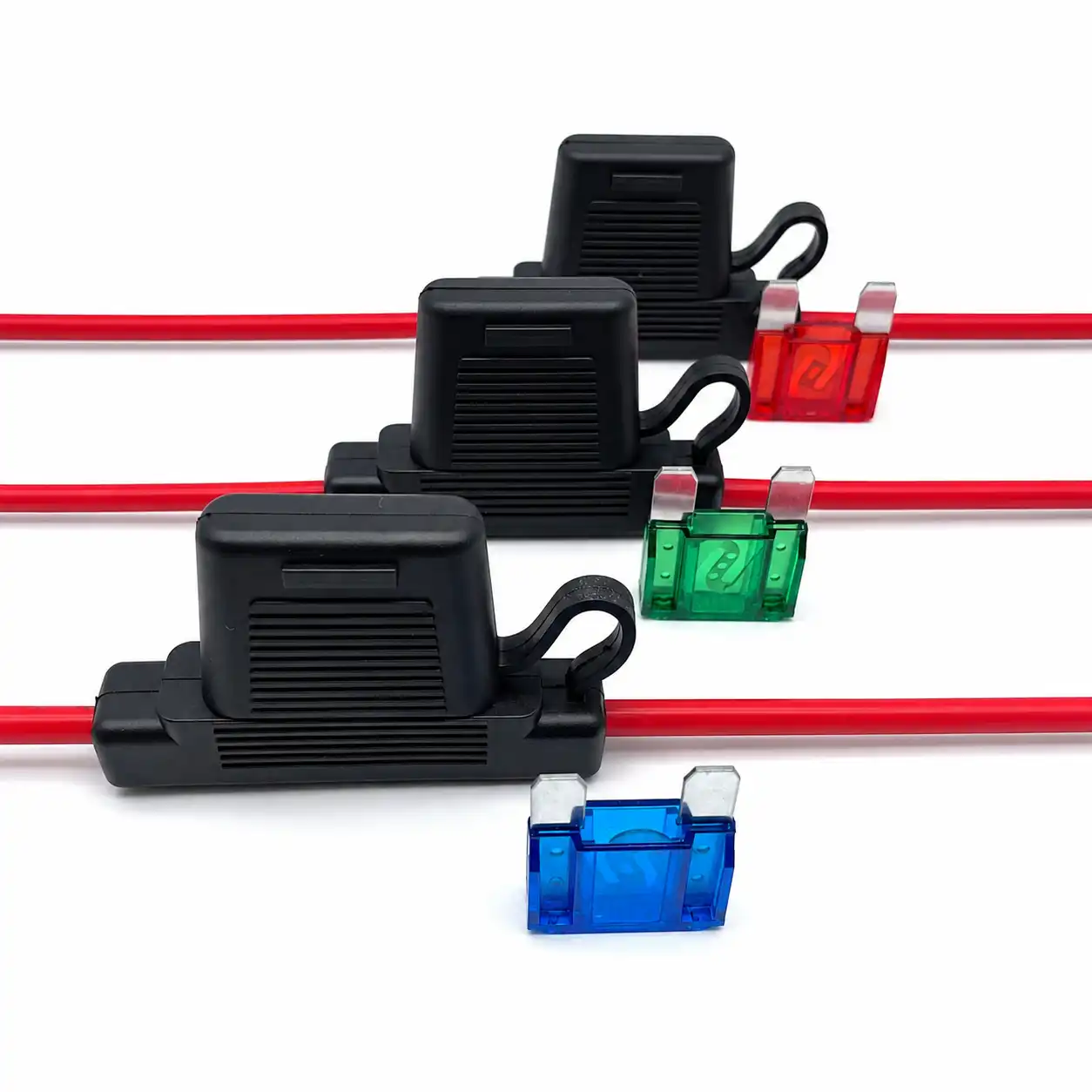
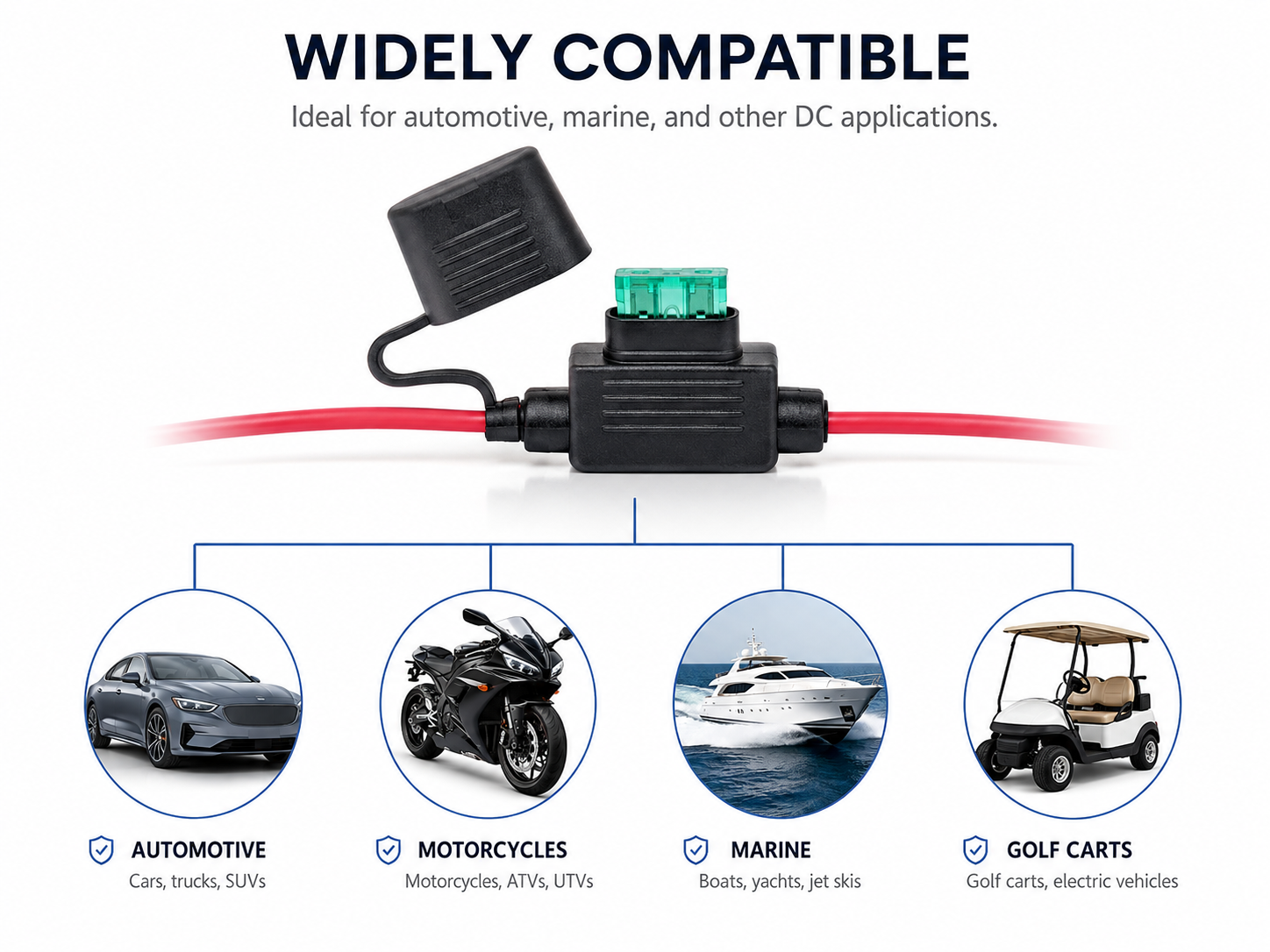
The Waterproof MAXI Fuse Holder is an inline circuit protection component designed for MAXI automotive blade fuses and higher-current vehicle electrical circuits.
Model CZY-FH03 is designed for 32V DC applications and supports MAXI fuse applications from 20A to 60A. The actual allowable current depends on the selected wire gauge, terminal configuration, ambient conditions, and final electrical application.
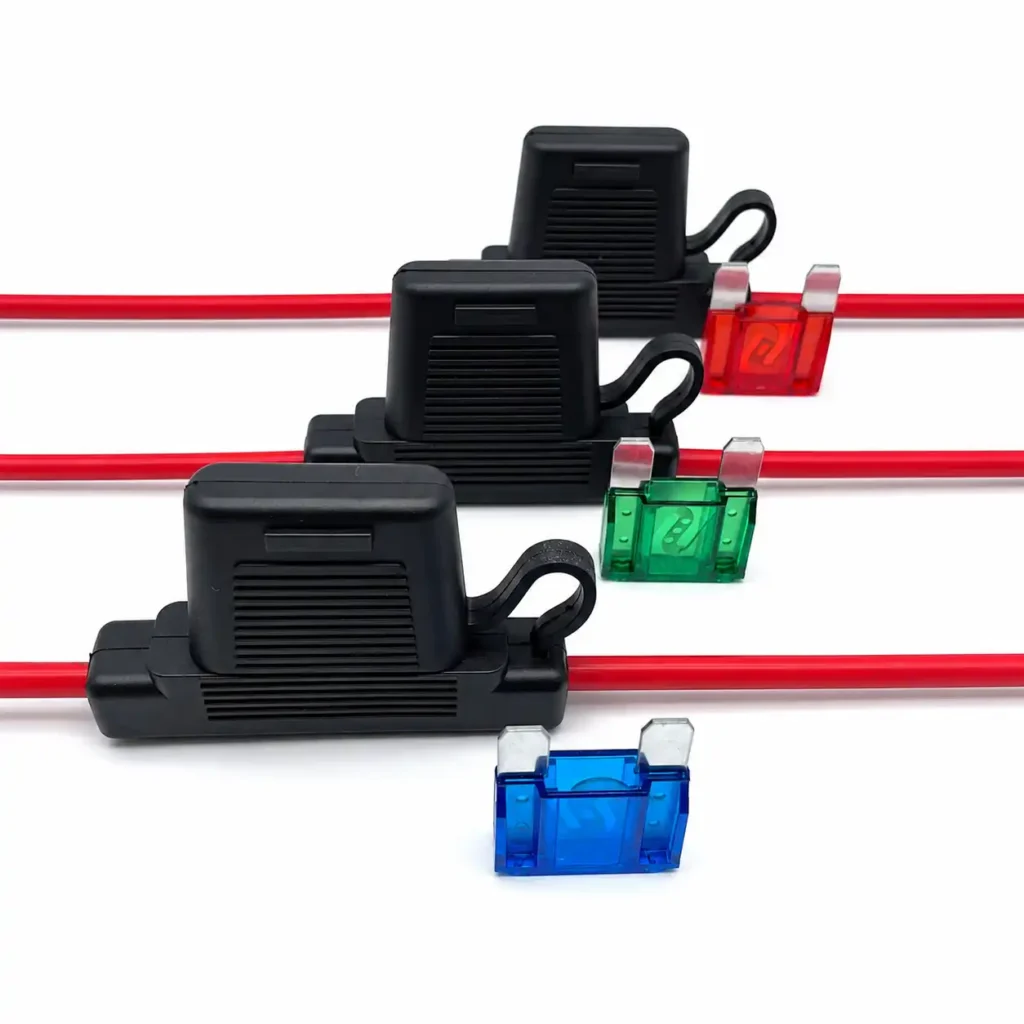
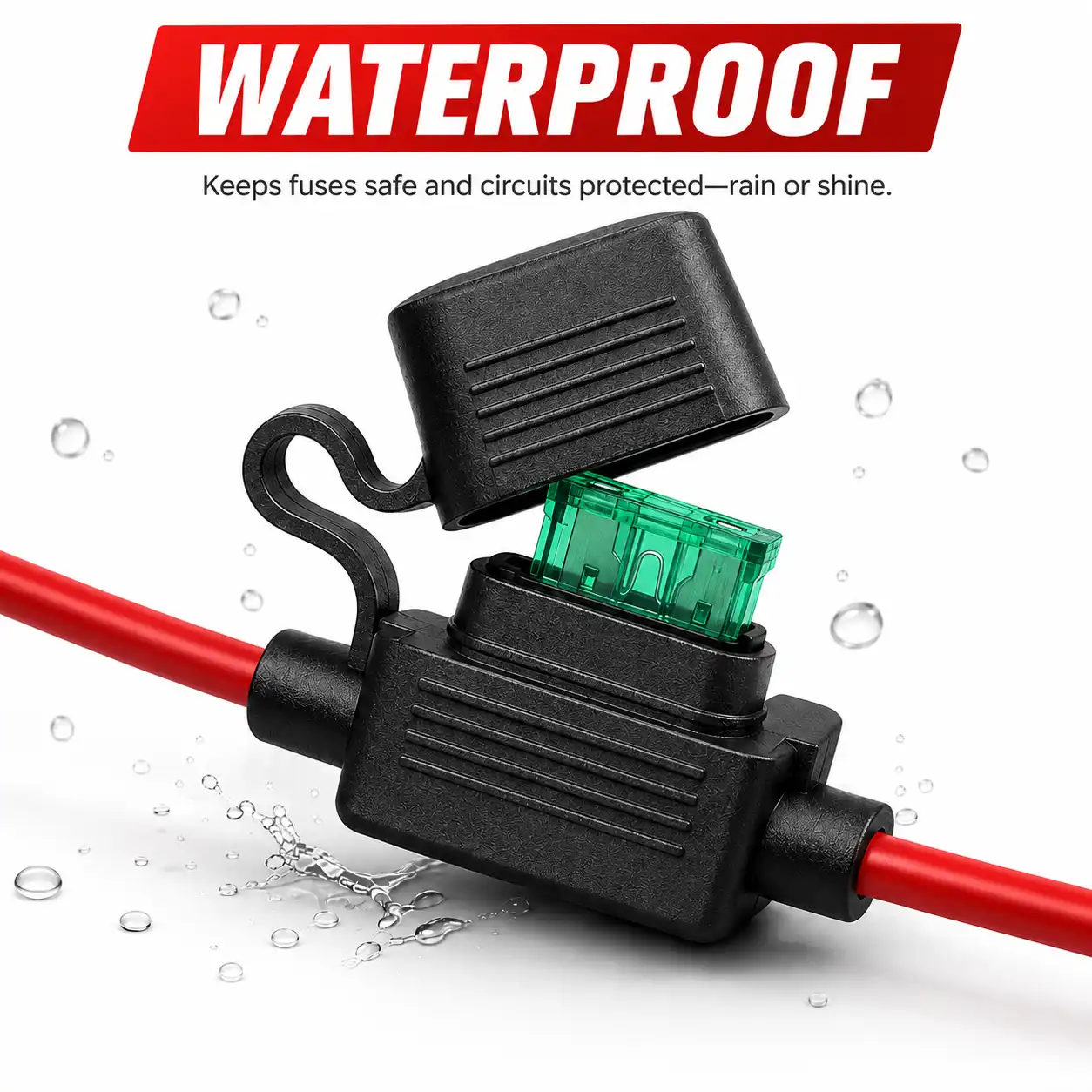
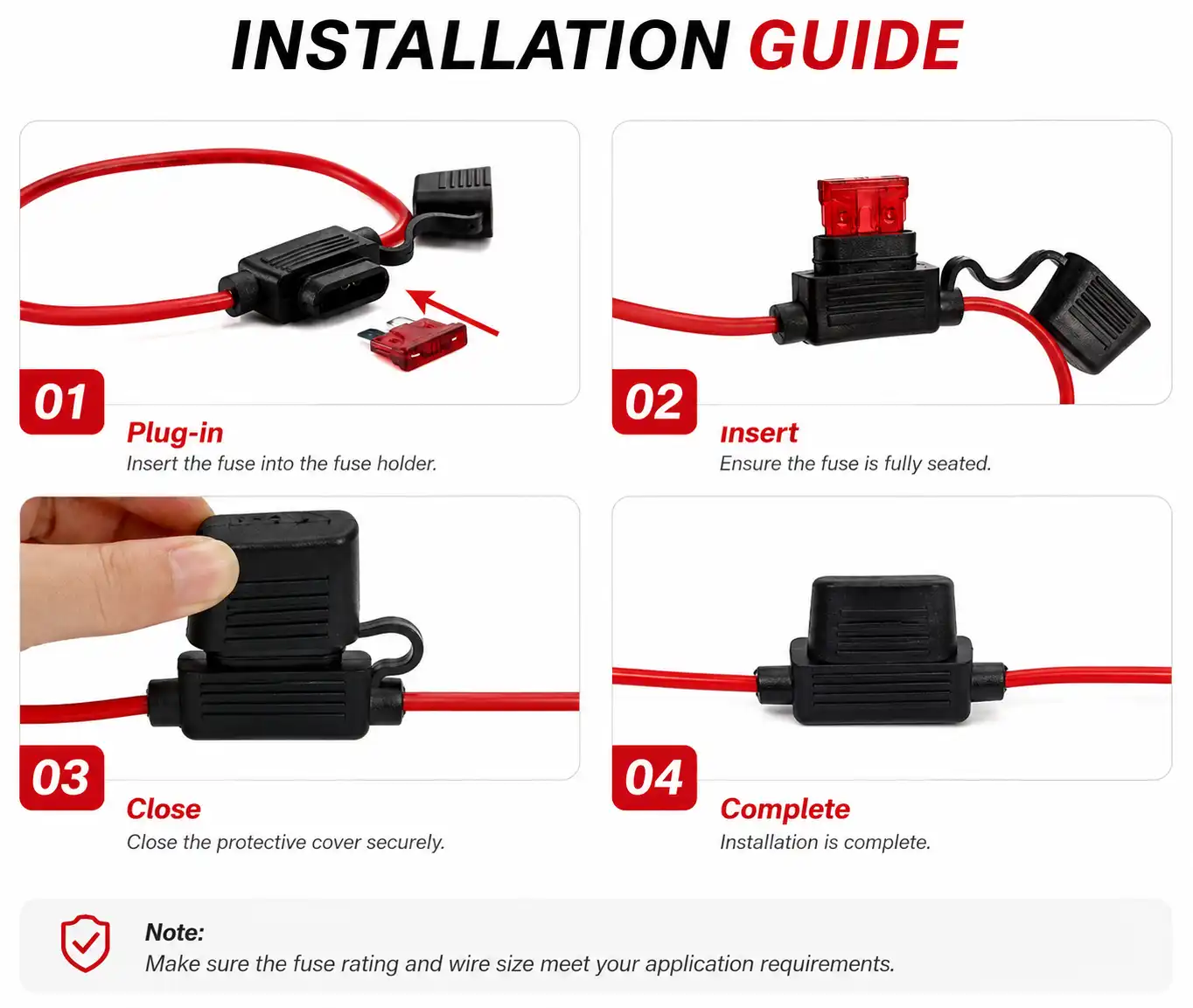
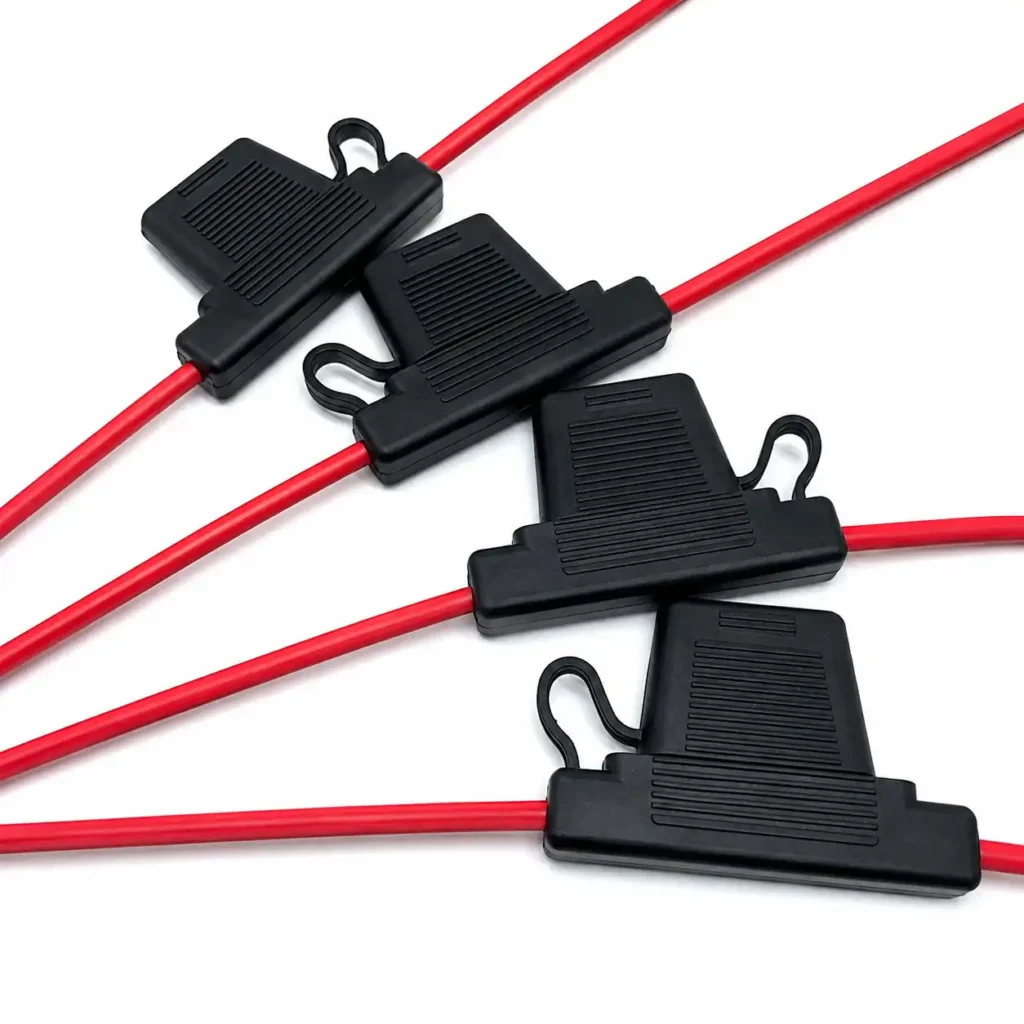
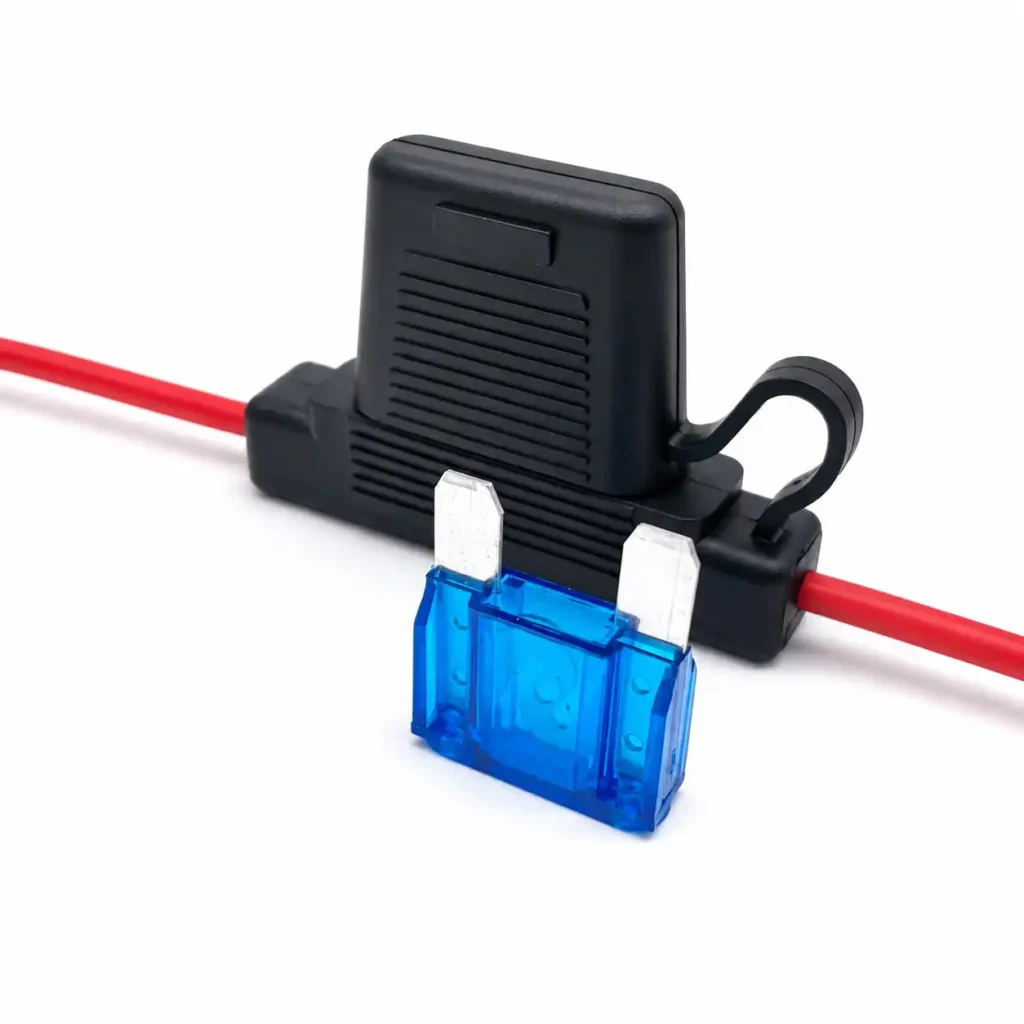
Its waterproof protective cover helps protect the installed fuse and connection area from moisture, dust, accidental contact, and external exposure.
The holder uses a PVC housing with brass conductive terminals and a tin-plated terminal surface. Wire gauge and wire length can be customized according to different current loads, wiring layouts, and OEM assembly requirements.
| Specification | Value |
|---|---|
| Product Type | Waterproof Inline MAXI Blade Fuse Holder |
| Model | CZY-FH03 |
| Fuse Type | MAXI Blade Fuse |
| Application Voltage | 32V DC |
| Compatible Fuse Rating Range | 20A–60A |
| Current Capacity | Depends on wire gauge and configuration |
| Housing Material | PVC |
| Terminal Material | Brass |
| Terminal Plating | Tin Plated |
| Wire Gauge | Customizable |
| Wire Length | Customizable |
| Cover Type | Waterproof Protective Cover |
| Installation Type | Inline |
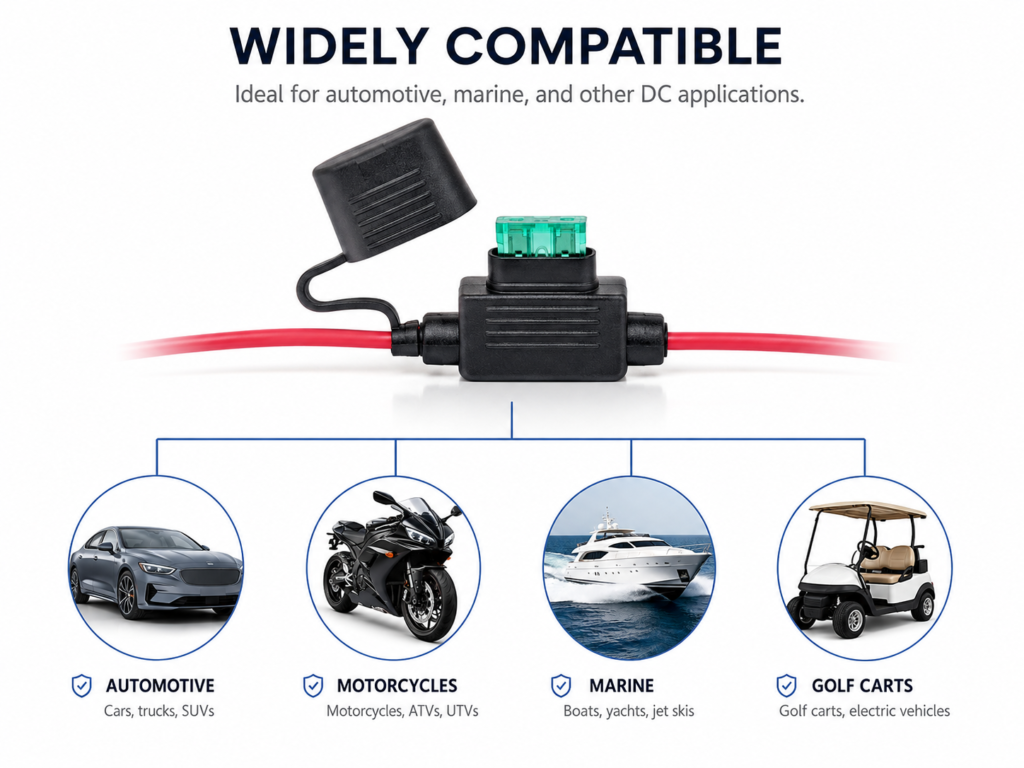
Typical applications include:
Wire gauge and wire length can be customized according to project requirements.
Different wire specifications can be selected according to current load, installation space, wiring layout, and connection requirements.
For higher-current applications, the appropriate wire gauge and terminal configuration should be selected according to the actual electrical load.