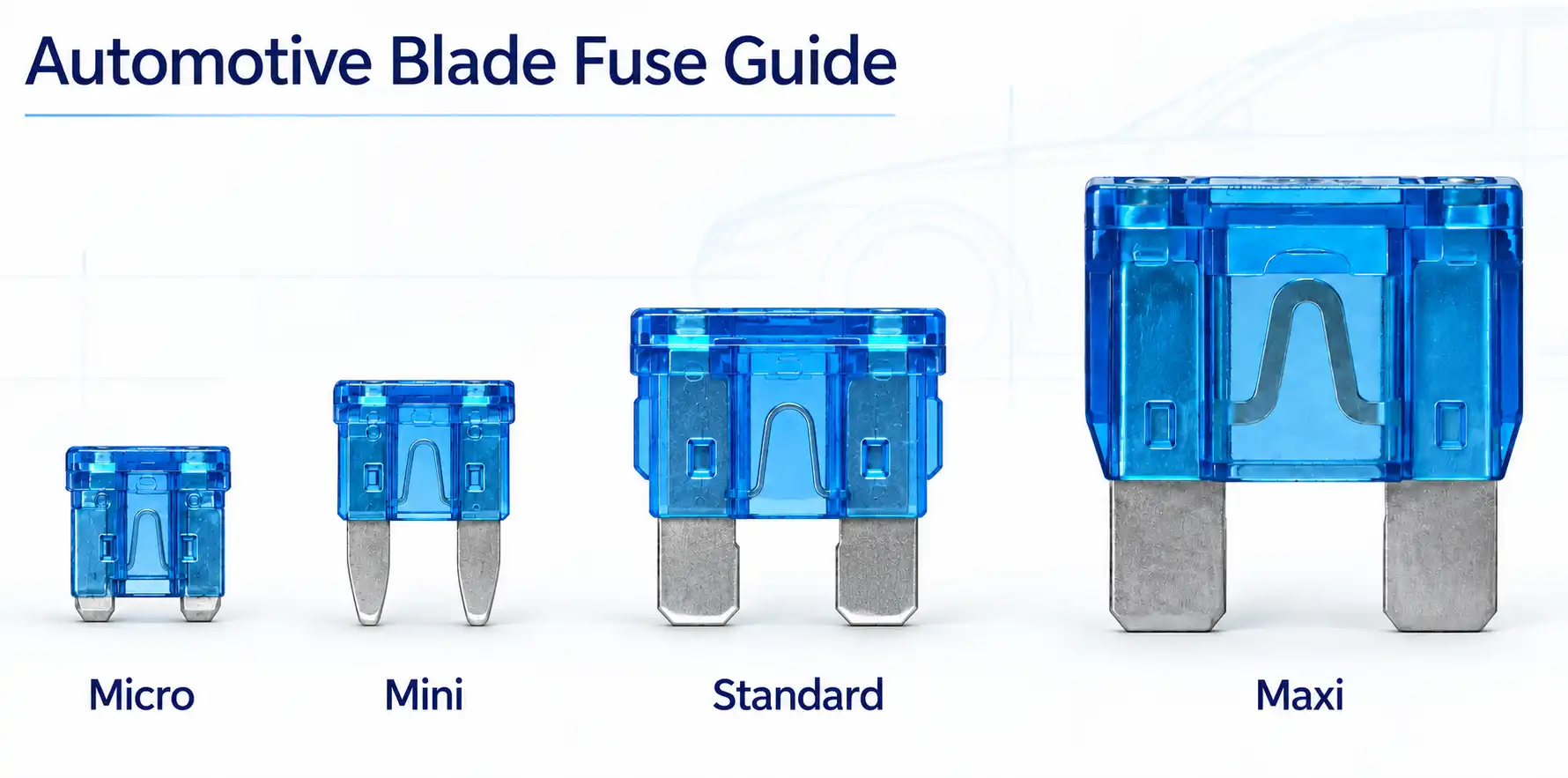
This automotive blade fuse guide explains how Micro, Mini, Standard and Maxi fuse formats differ and what buyers should verify before selecting a replacement or sourcing a fuse series. The most important point is simple: the amp number alone does not identify the fuse. Physical format, current rating, voltage rating and holder compatibility all matter.
That distinction is especially important in modern vehicles, where several compact fuse families can look similar at a glance. Real-world discussions regularly show users confusing Mini, Micro2 and low-profile formats, particularly when choosing fuse taps. A safer selection process starts with the physical fuse family and then confirms the electrical specification
Quick Answer: Which Blade Fuse Format Do You Need?
This automotive blade fuse guide helps engineers, installers and buyers understand the differences between Micro, Mini, Standard and Maxi fuse formats before selecting the correct fuse.
| Fuse Format | Typical Role | Main Selection Check |
|---|---|---|
| Micro | Compact vehicle fuse boxes | Exact body and terminal format |
| Mini | Space-saving automotive circuits | Size, current rating and holder fit |
| Standard | General automotive circuit protection | Standard-size holder compatibility |
| Maxi | Higher-current vehicle circuits | Current range, voltage and holder design |
Cozy Electronics supplies multiple automotive blade fuse formats for vehicle circuit-protection applications.
What Is an Automotive Blade Fuse?
An automotive blade fuse is a replaceable fuse-link with flat blade-style terminals that plugs into a compatible fuse box or holder. When the fuse element reaches its designed operating condition under overcurrent, it opens the circuit.
The current ISO framework is more precise than common market names. ISO 8820-3:2026 covers blade-type road-vehicle fuse-links Type C (medium), Type E (high current) and Type F (miniature), including rated-current, test, performance and dimensional requirements within that standard’s scope. ISO 8820-12:2020 separately covers Type N sub-miniature blade fuse-links. These standards are useful technical references, but citing them does not mean every commercial blade fuse is certified to them.
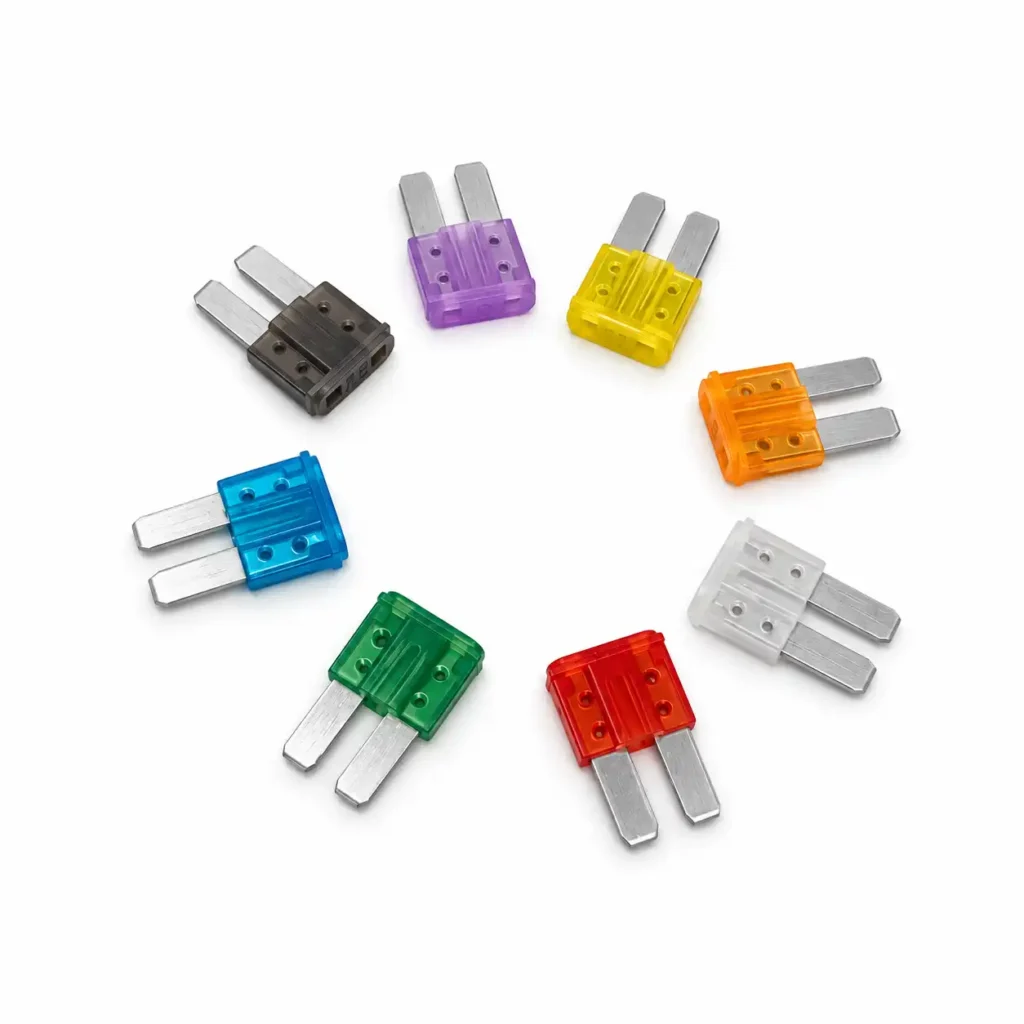
Micro Blade Fuse
Micro-format fuses are intended for compact fuse-box layouts. The challenge is that “micro” is often used casually in the market, while actual compact fuse families can have different body heights, blade spacing or terminal arrangements.
Before sourcing a Micro fuse, confirm:
- the exact physical format;
- the rated current printed or specified for the circuit;
- the system voltage;
- the mating fuse-box or holder design.
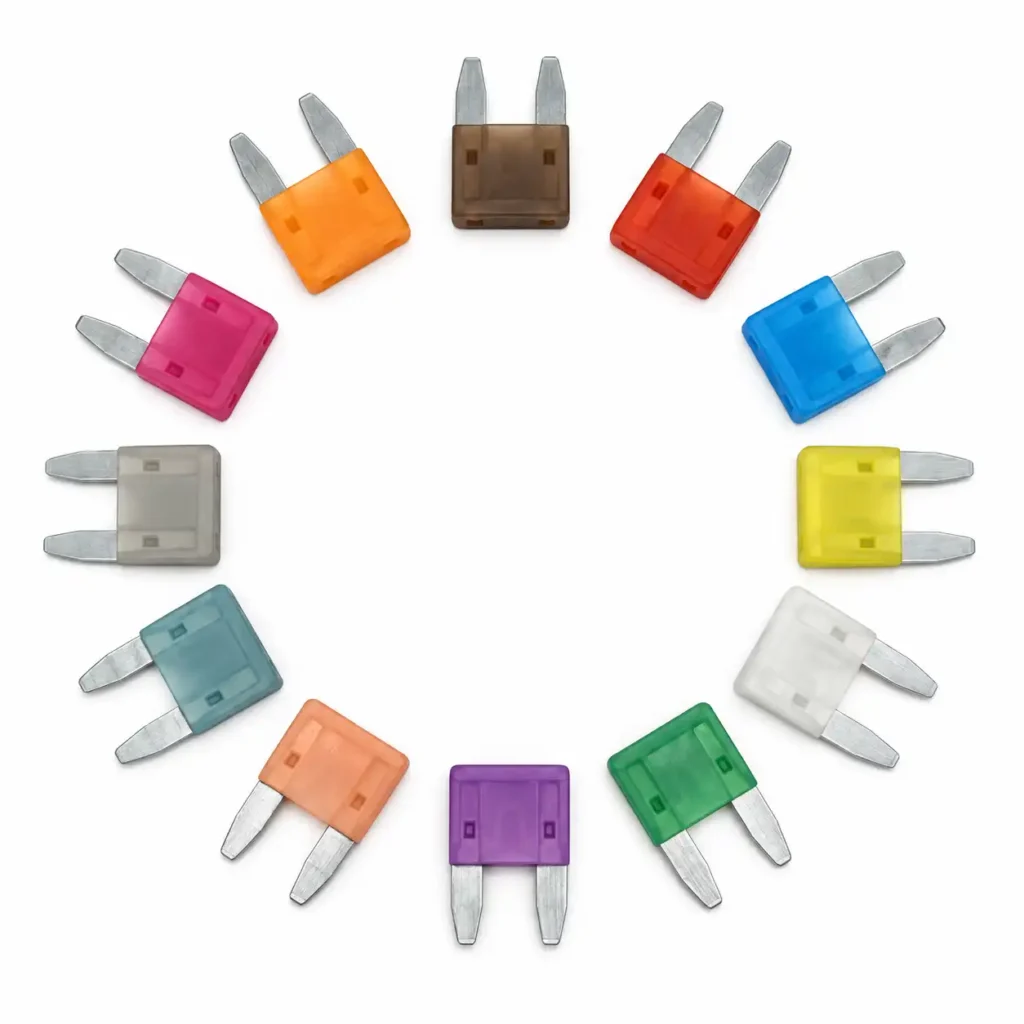
Mini Blade Fuse
Mini blade fuses are also compact, but they are not interchangeable with every Micro-format fuse. A Mini fuse can have the same amp rating as a Micro fuse and still be mechanically incompatible.
This is why the correct question is not “Do I need a 10A fuse?” but “Which fuse format does this 10A circuit use?” For a closer comparison, see our Micro fuse vs Mini fuse guide.
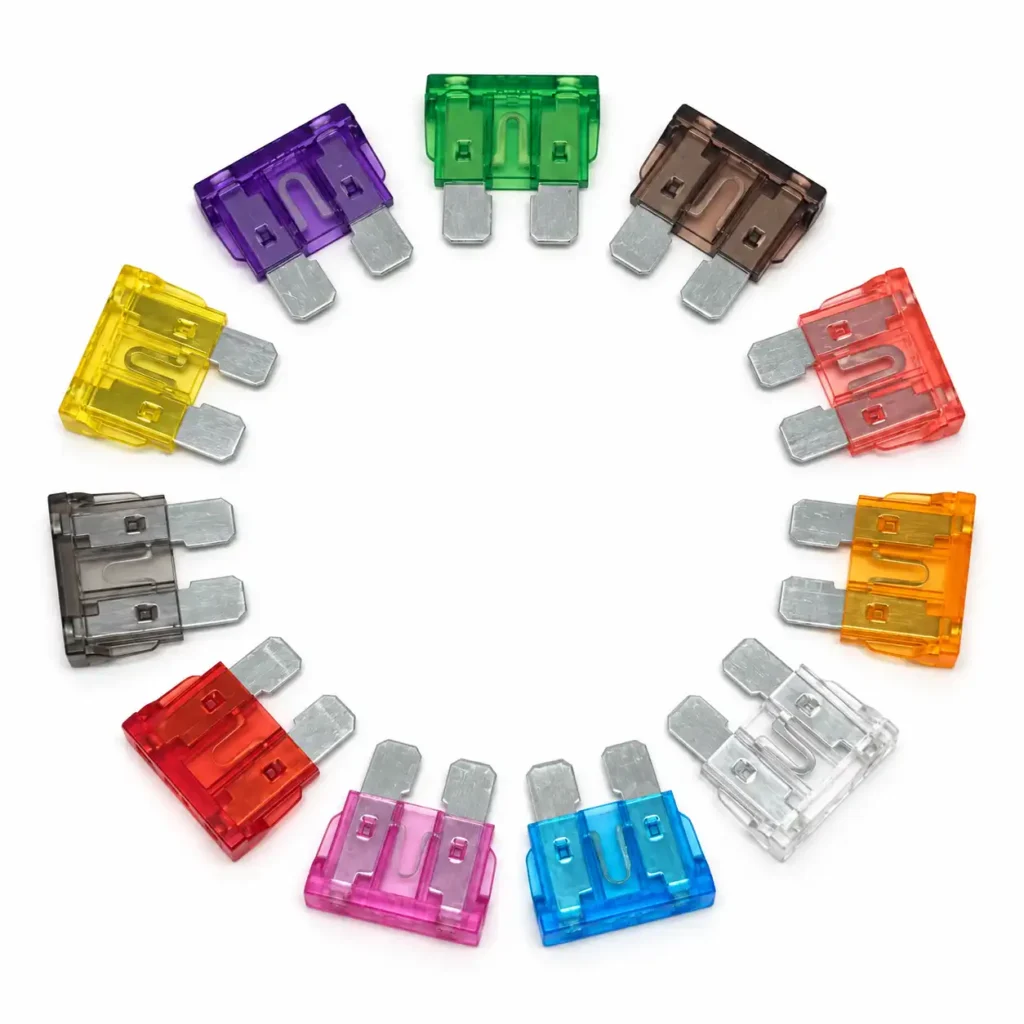
Standard Blade Fuse
Standard blade fuses are a larger conventional format used across many automotive and accessory circuits. Market naming can include terms such as standard, regular, ATC or ATO. Because catalog terminology varies, B2B buyers should match the drawing and electrical requirements rather than relying on one alias alone.
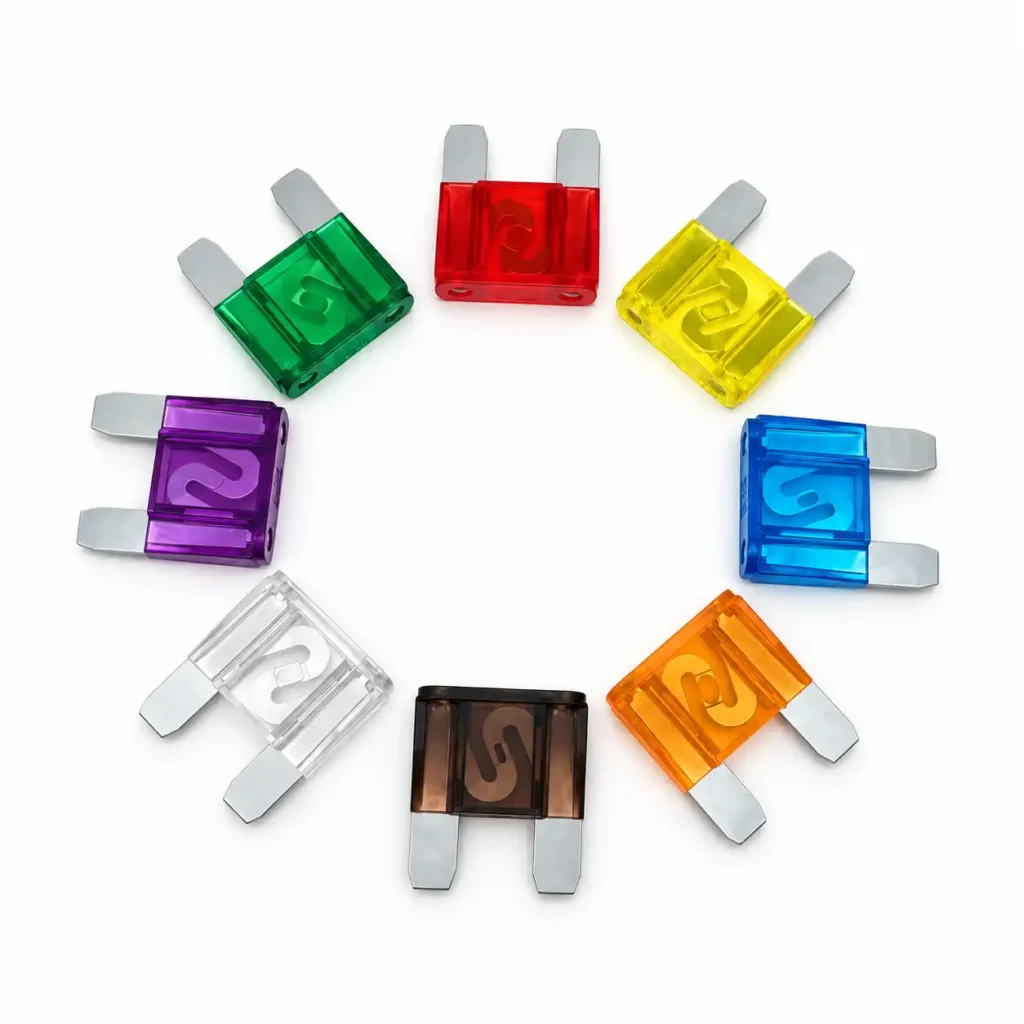
Maxi Blade Fuse
Maxi blade fuses are a larger blade format commonly selected for higher-current circuits than compact Mini or Micro families. Typical use cases include vehicle power distribution and other circuits where a larger blade fuse format is appropriate.
A Maxi fuse should not be treated as an automatic “upgrade” when a smaller fuse or holder overheats. The correct fuse still depends on the wiring, load, holder and circuit design. Read the Maxi fuse guide for a focused selection checklist.
What Actually Changes Between Fuse Formats?
| Selection Factor | Why It Matters |
|---|---|
| Body size | Determines whether the fuse physically fits the intended slot |
| Blade geometry | Controls mechanical and electrical mating with the holder |
| Current rating | Must match the protected circuit requirement |
| Voltage rating | Must be suitable for the electrical system |
| Time-current behavior | Determines how the fuse responds to overcurrent |
| Holder compatibility | Incorrect fit can create poor contact or prevent installation |
In this automotive blade fuse guide, physical size, terminal design and current rating should always be checked together.
Can Different Blade Fuse Sizes Be Interchanged?
Not simply because they carry the same current number. Fuse format and electrical rating are separate characteristics. A replacement should match the original fuse family or the approved circuit design.
If you are choosing a separate mounting solution rather than an OEM fuse-box slot, review the available fuse holder options and confirm the holder is designed for the exact fuse family.
How to Choose the Right Automotive Blade Fuse
1. Identify the Original Fuse Format
Compare body shape, blade arrangement and physical fit. Do not identify a fuse only by body color.
2. Confirm the Current Rating
Use the current rating specified by the vehicle manufacturer or circuit design. Do not raise the amp rating to stop nuisance blowing without diagnosing the reason.
3. Verify Voltage Compatibility
Current rating and voltage rating are different specifications. Confirm both.
4. Check the Fuse Holder or Fuse Box
For add-on circuits, the mating holder or fuse tap must match the blade family. Browse Cozy Electronics fuse tap options when adding an accessory circuit.
Frequently Asked Questions
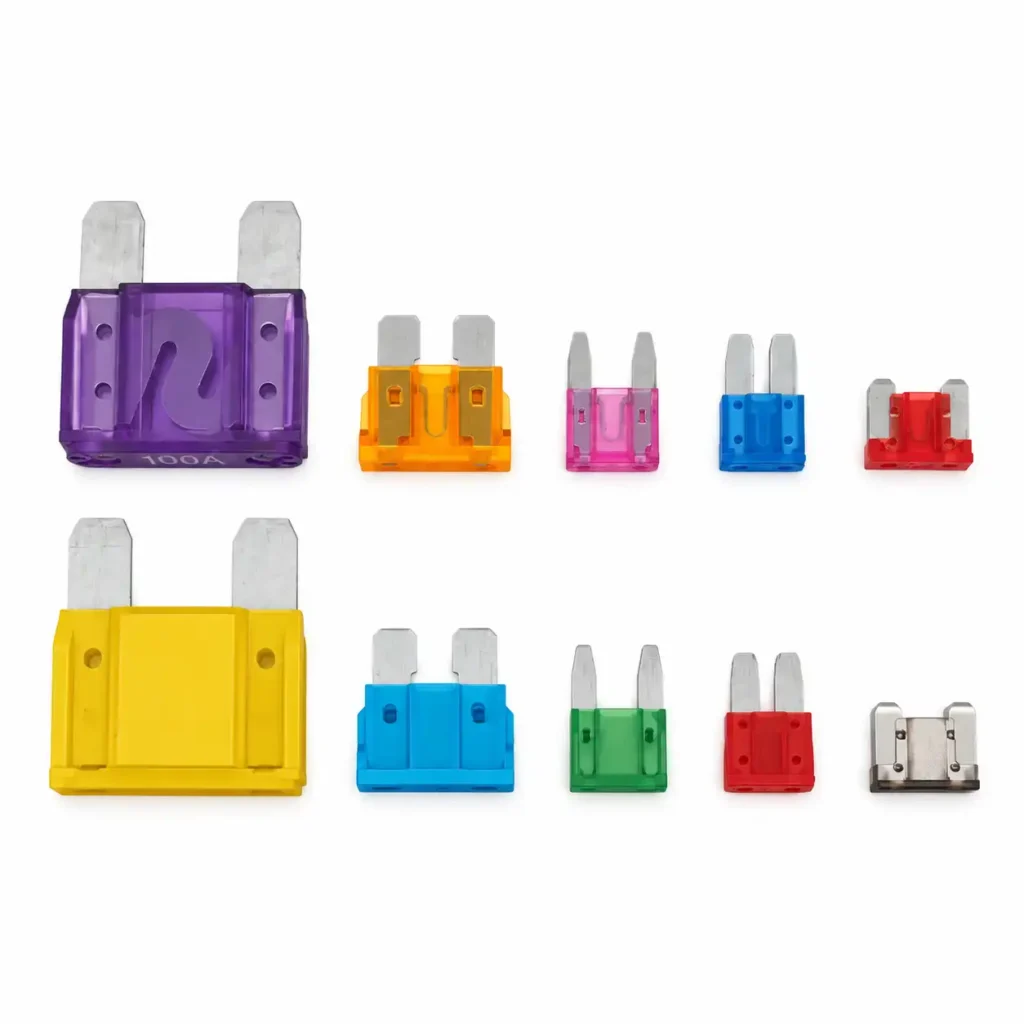
Is the fuse color enough to identify the fuse?
No. Color can help with identification, but use the printed current marking and verified specification to confirm the actual rating.
Can a 15A Mini fuse replace a 15A Micro fuse?
Not unless the physical fuse format and holder are specifically compatible. Equal amperage does not make different fuse families interchangeable.
Which blade fuse is used for higher-current applications?
Maxi is a common higher-current blade-fuse format, but the correct choice still depends on the circuit design and holder.
Conclusion
The most reliable way to select an automotive blade fuse is to verify format, current rating, voltage and holder compatibility as separate requirements. For distributors and OEM buyers, that same checklist should be reflected in drawings, specifications and incoming inspection criteria.
This automotive blade fuse guide provides a practical reference for engineers, installers and purchasing teams who need to select the correct automotive fuse format for vehicle electrical systems.