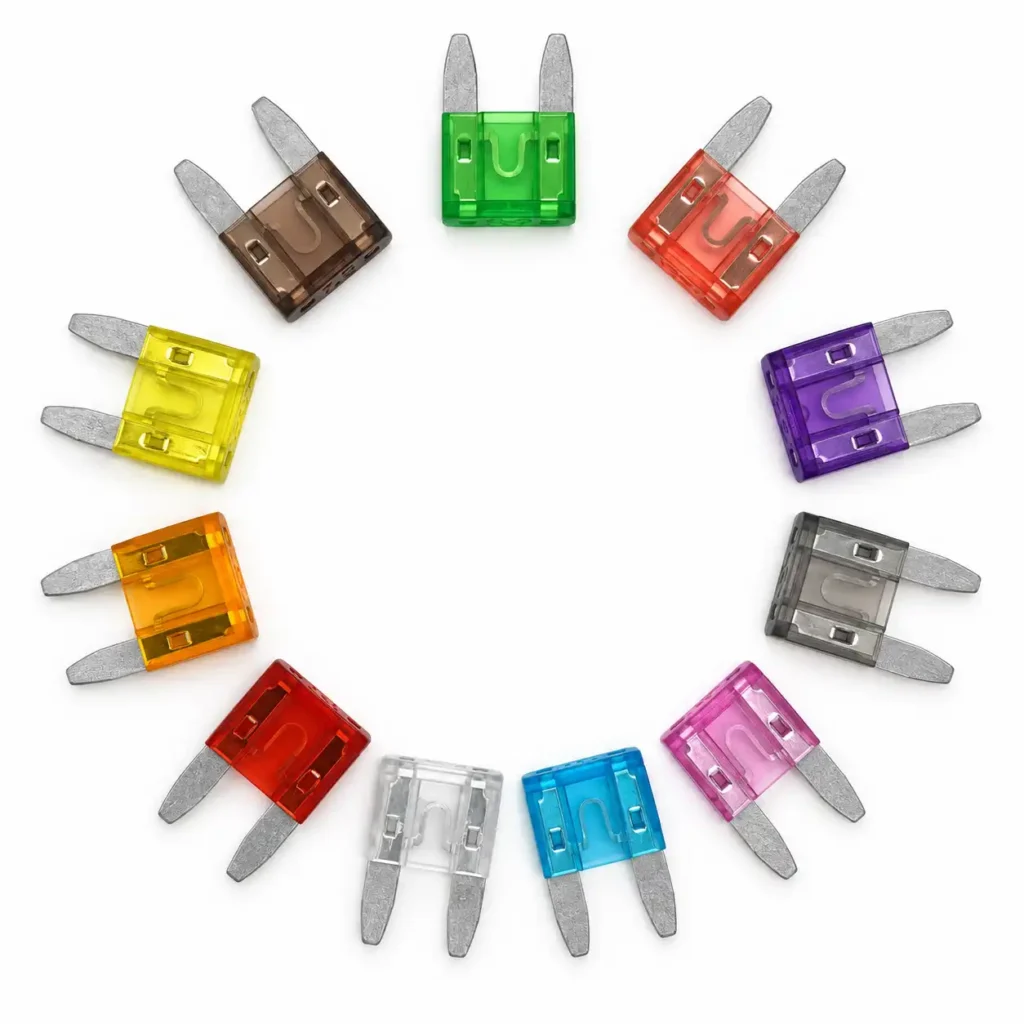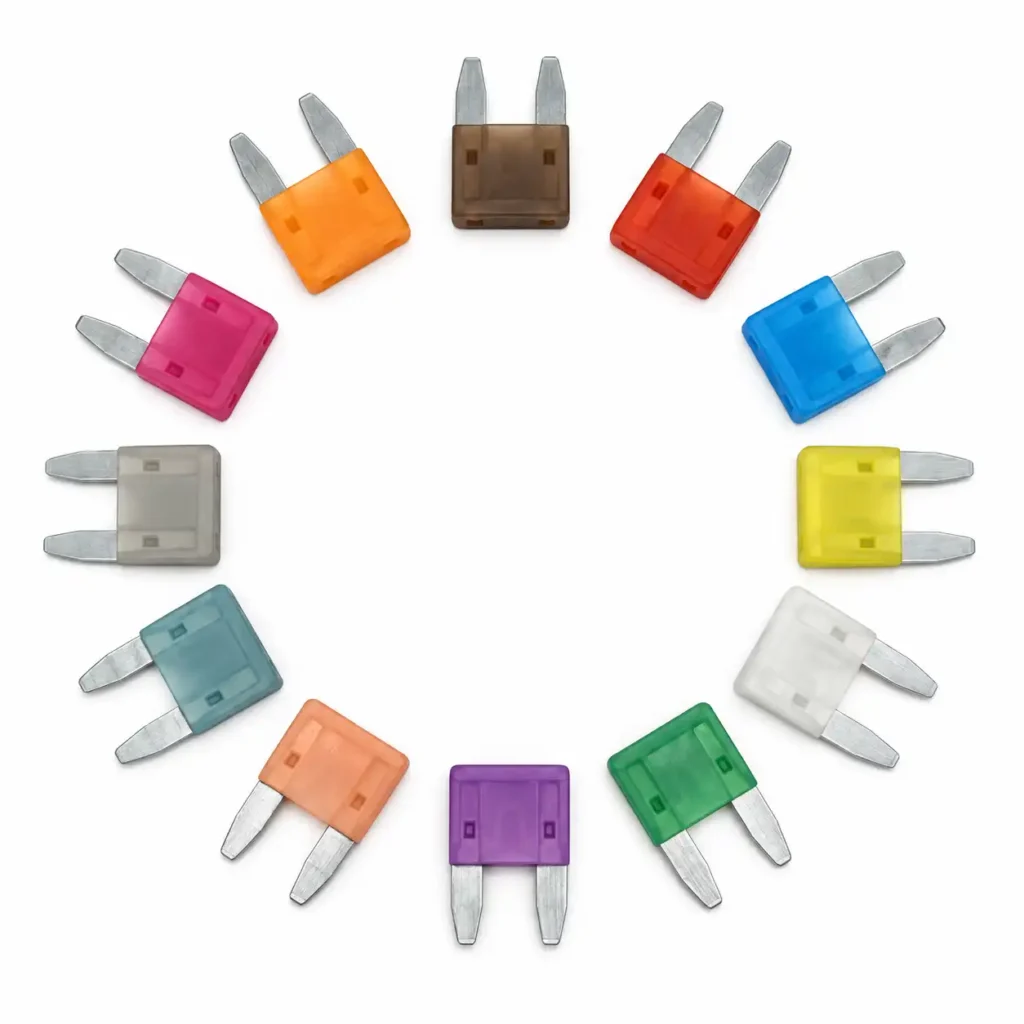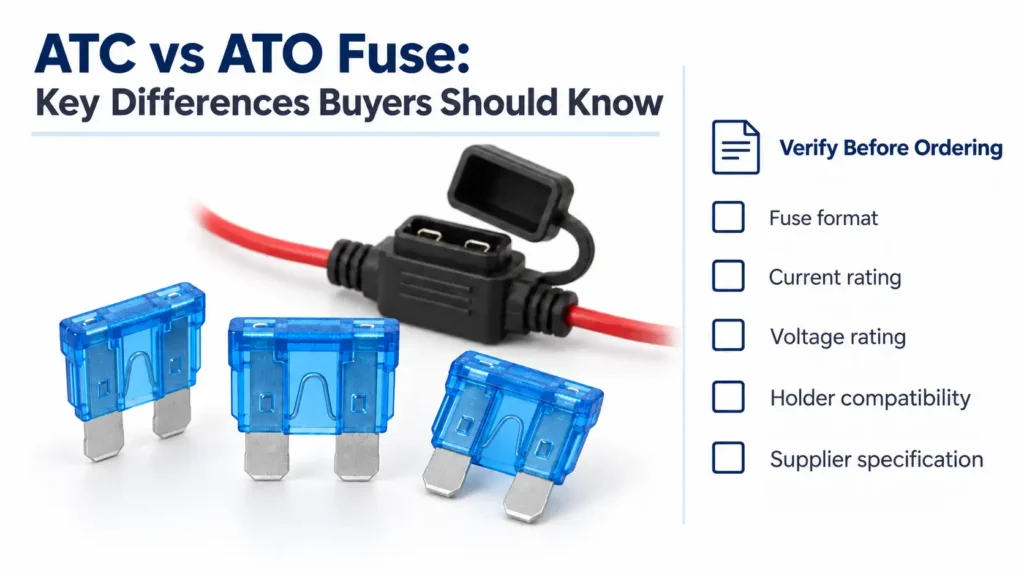
Micro fuse vs Mini fuse is one of the most common automotive fuse-identification problems. Both are compact blade-fuse formats, and a product package that simply says “small blade fuse” is not enough to guarantee compatibility.
The safest way to tell them apart is to compare the body shape, blade arrangement and holder fit, then confirm the current and voltage ratings. This matters even more when buying an add-a-circuit fuse tap, because the wrong tap may not seat correctly in the fuse box.
Micro Fuse vs Mini Fuse: Quick Answer
| Feature | Micro Fuse | Mini Fuse |
|---|---|---|
| General size | More compact family | Compact but larger than some Micro formats |
| Physical construction | Depends on Micro subtype | Dedicated Mini blade format |
| Holder fit | Requires matching Micro-format slot | Requires matching Mini-format slot |
| Same amp number interchangeable? | No — physical compatibility must also match | |
This Micro fuse vs Mini fuse comparison shows why physical format matters just as much as the current rating when selecting a replacement fuse.
Why Micro and Mini Fuses Get Confused
Real users frequently report buying a “Mini” fuse tap and discovering that the product appears closer to Micro2. The problem is understandable: compact fuse families are visually similar, packaging terminology can be inconsistent and many vehicle owners identify the fuse only after removing it.
Do not force a tap or fuse into a slot that does not match.
Micro Is a Family, Not Just “Smaller Than Mini”
Compact road-vehicle fuse standards distinguish specific sub-miniature types. ISO 8820-12:2020 covers Type N sub-miniature blade fuse-links within a defined 32V and current scope. Other compact fuse types are covered by other parts of the ISO 8820 series.
This is why a vague label such as “Micro fuse” should be backed by a drawing or subtype when sourcing at scale.
Mini Blade Fuse
Mini fuses use their own physical blade format. They are common in vehicle fuse boxes where space is limited, but they should not be confused with low-profile Mini or Micro2 designs.
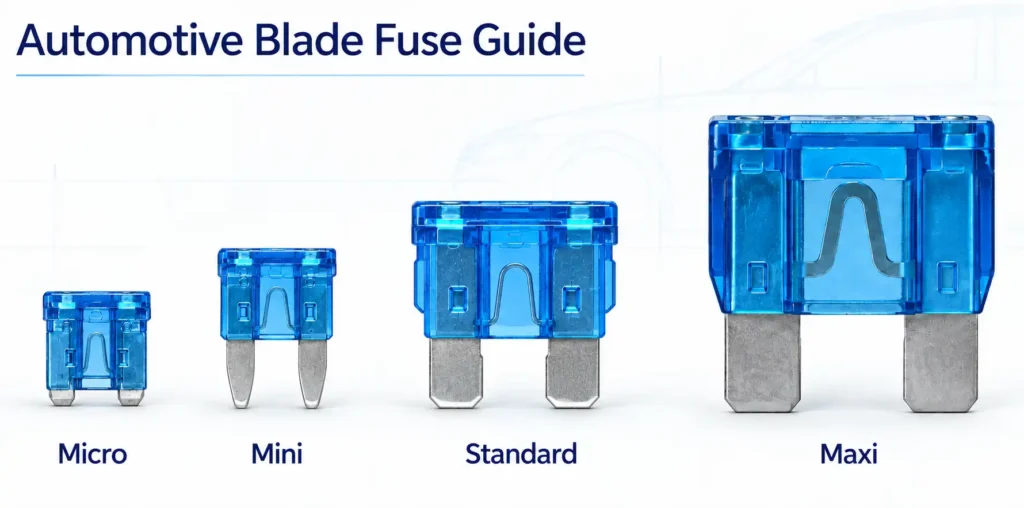
For a broader overview, see the automotive blade fuse guide.
How to Identify the Correct Fuse
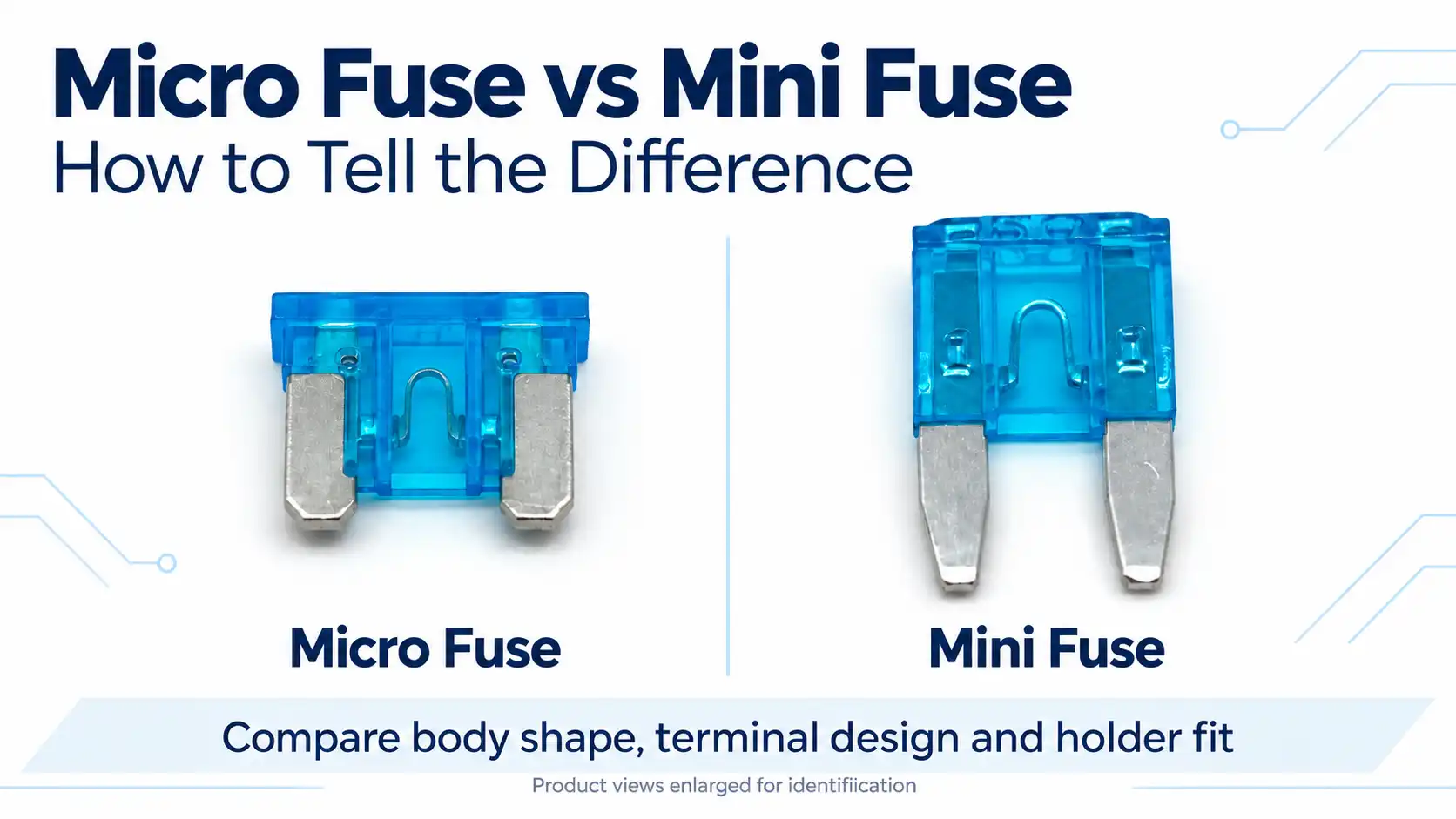
For Micro fuse vs Mini fuse identification, compare the fuse body, blade arrangement and holder fit before checking the electrical rating.
1. Remove the Original Fuse Safely
Follow the vehicle service information and power-down procedure before removing a fuse.
2. Compare the Body Shape
Look at the overall height, width and how far the blades extend from the body.
3. Compare the Blade Arrangement
Blade spacing and geometry are more reliable than a generic package name.
4. Read the Amp Marking
The current number must match the circuit requirement. Color is only a secondary visual cue.
5. Confirm the Fuse Tap Type
If you are installing an accessory, the fuse tap must match the exact fuse family used by the vehicle.
Can a Micro Fuse and Mini Fuse Have the Same Amp Rating?
Yes. Two physically different fuse families can carry the same amp marking. That does not make them interchangeable. Think of current rating as the electrical specification and fuse family as the mechanical interface.
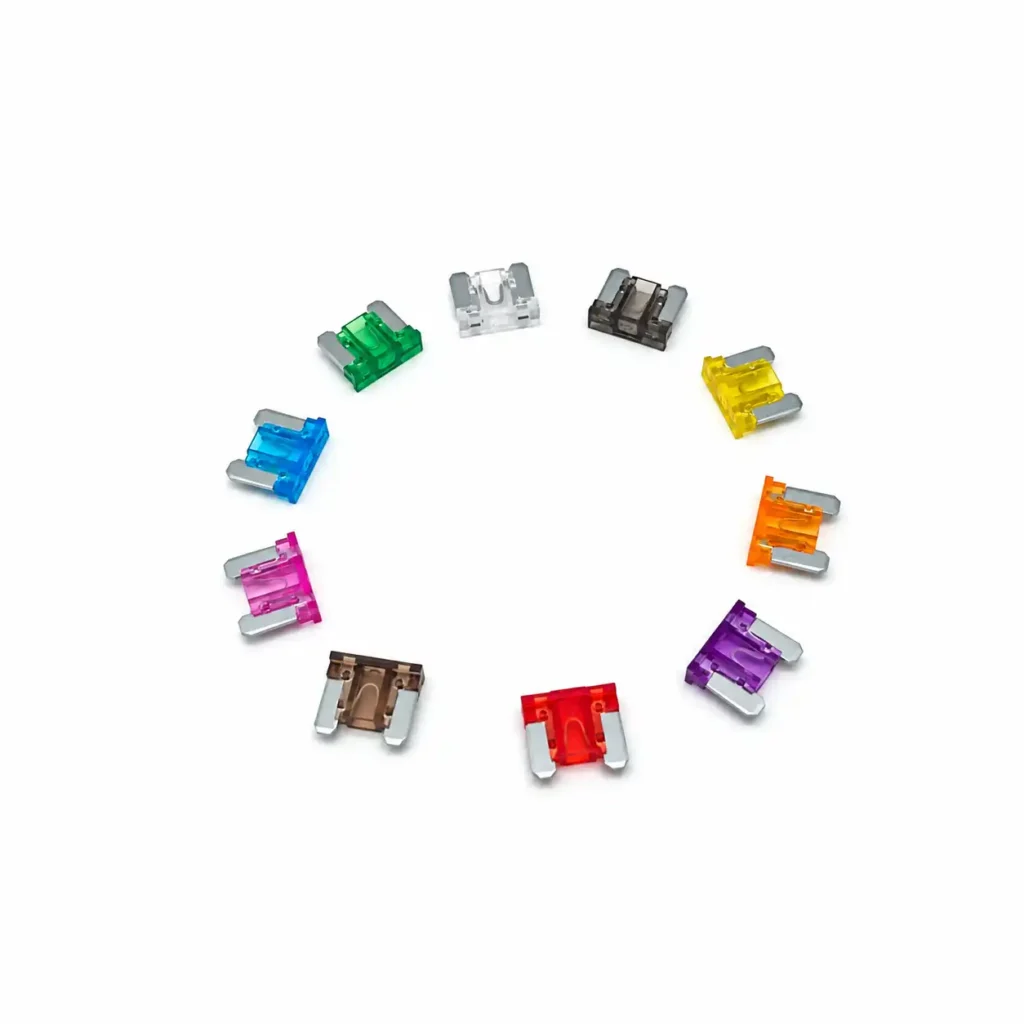
What About Low-Profile Mini?
Low-profile Mini is another compact format. It can be especially easy to confuse with other small blade fuses because the body width may look familiar while the blade exposure and overall height differ.
If there is any uncertainty, use the original fuse as a physical reference or request the fuse-box specification.
Why This Matters for B2B Buyers
For distributors and OEM sourcing teams, fuse-format mistakes create returns, fitment complaints and packaging errors. A purchase specification should include:
- fuse family/subtype;
- rated current range;
- voltage rating;
- drawing or dimensions;
- body material if required;
- packaging and marking requirements.
Cozy Electronics supplies multiple automotive blade fuse formats for vehicle electrical applications.
Frequently Asked Questions
Can I replace a Mini fuse with a Micro fuse if both are 10A?
No, not based on amperage alone. The fuse must also match the physical holder format.
Why does my Mini fuse tap not fit?
The fuse box may use Micro2, low-profile Mini or another compact format. Compare the original fuse and tap geometry before installation.
Is Micro2 the same as Micro3?
No. They are different physical fuse formats and should be sourced separately.
Conclusion
Micro and Mini fuses are different mechanical formats. Identify the body and blade geometry first, then confirm current, voltage and holder compatibility. That same process prevents most fuse-tap fitment errors.
Understanding Micro fuse vs Mini fuse differences helps buyers and installers avoid incorrect fuse and fuse tap selection.