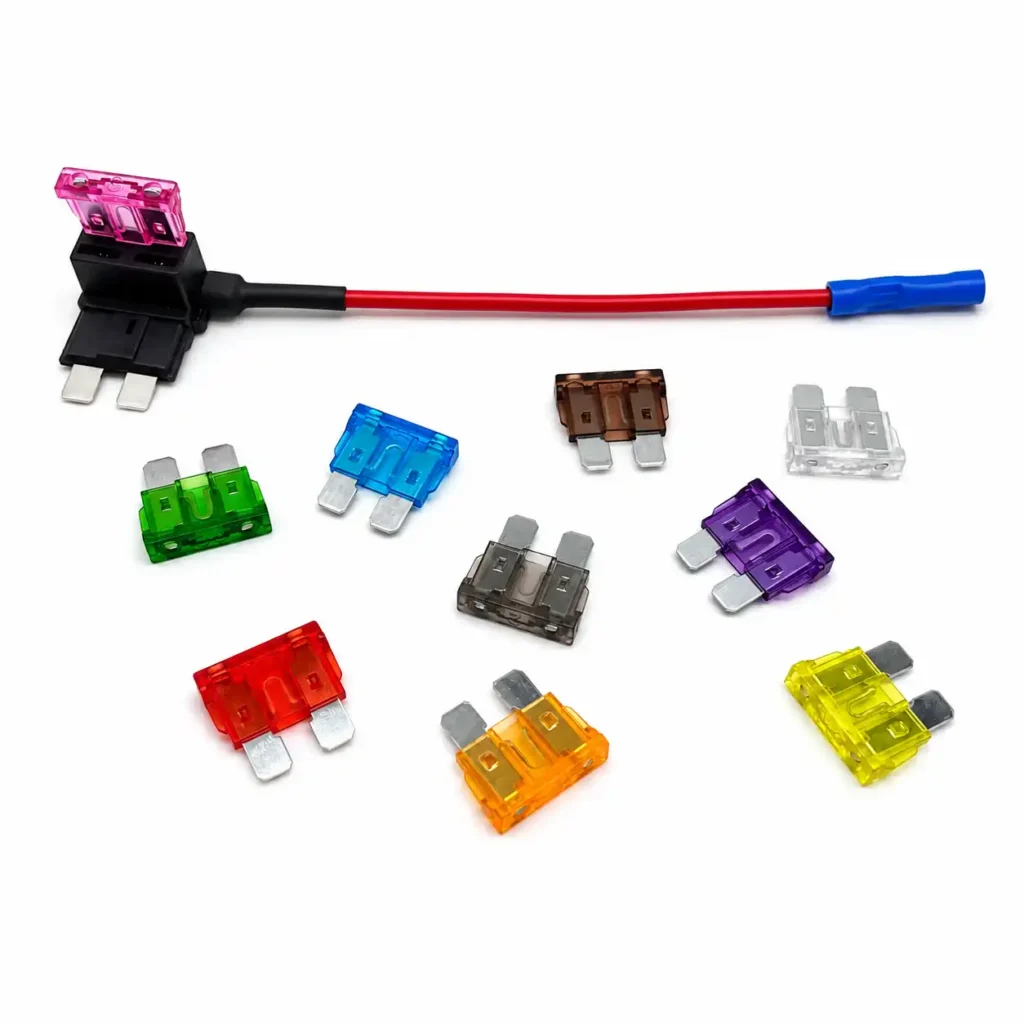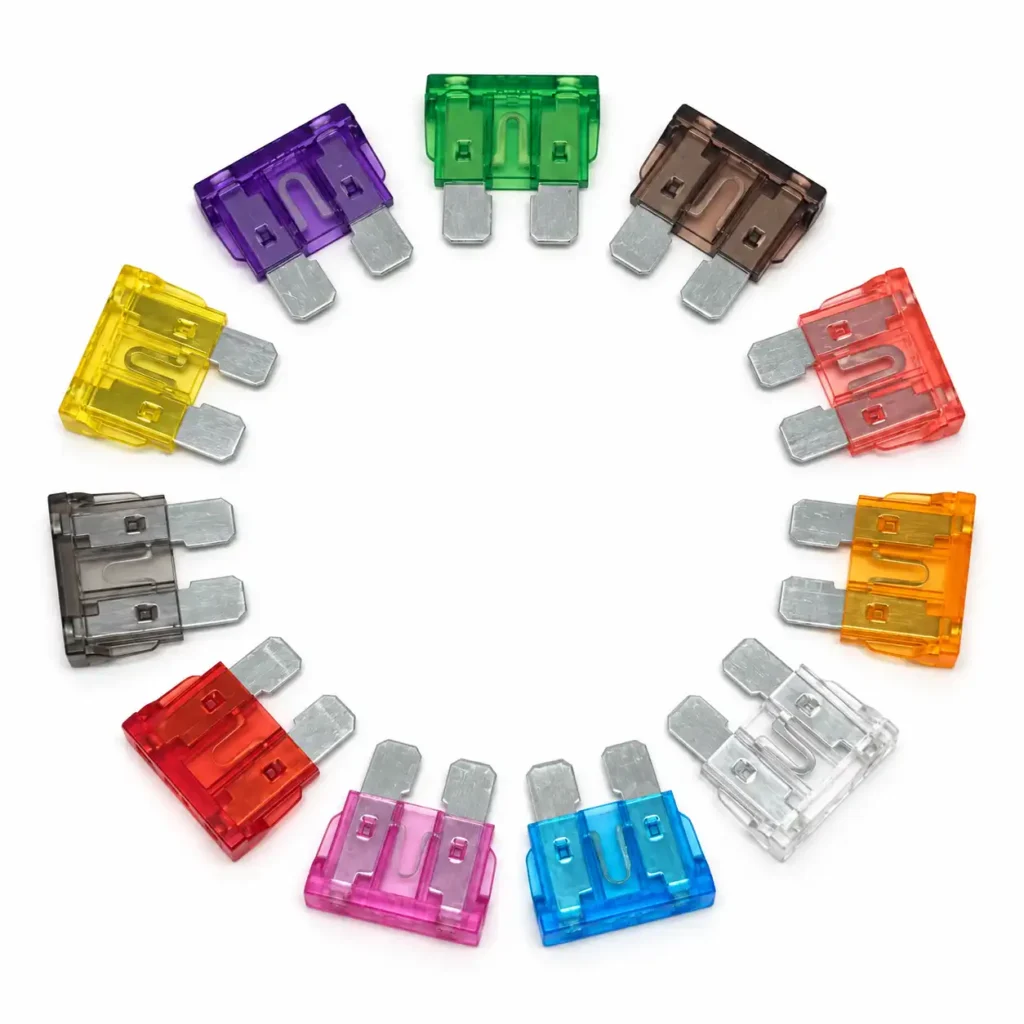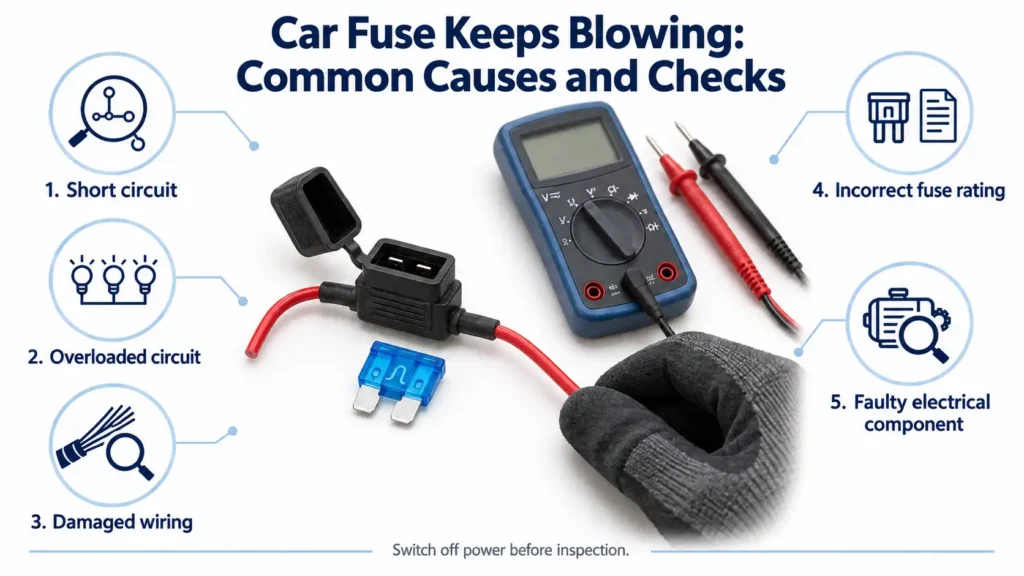
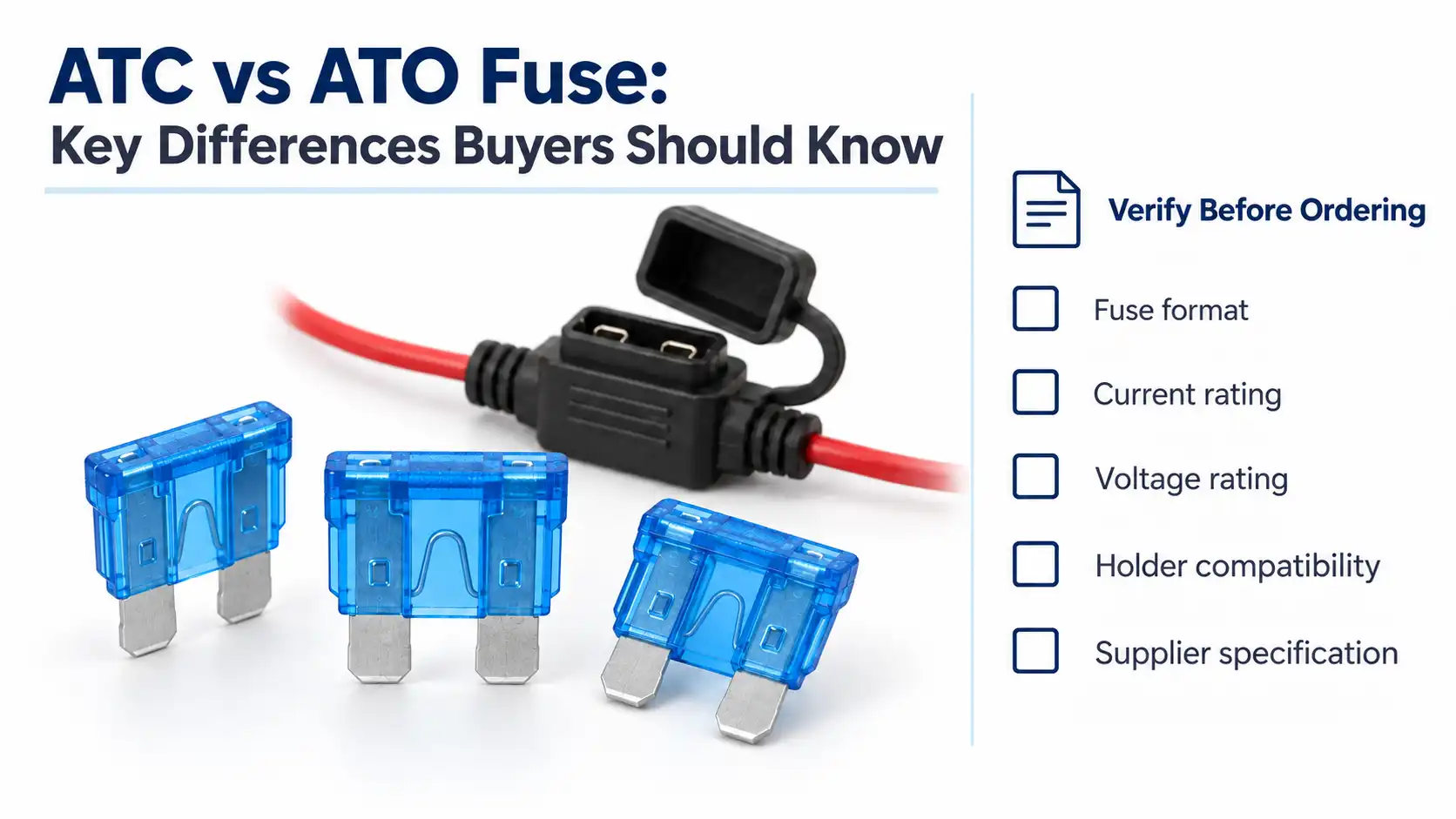
The search phrase ATC vs ATO fuse sounds simple, but sourcing by the label alone can create unnecessary confusion. In commercial catalogs, both terms are widely associated with the regular or standard automotive blade-fuse family, yet suppliers do not always use the terminology in exactly the same way.
For B2B purchasing, the better question is: Does this fuse match the required drawing, electrical rating and performance specification?
ATC vs ATO Fuse: Quick Answer
The main difference between ATC vs ATO fuse designs is usually related to the fuse body construction and terminal sealing approach, while both belong to the standard automotive blade fuse family.Because naming conventions can vary, do not approve a fuse only from the acronym.
Why the Terminology Is Confusing
Informal automotive discussions show buyers trying to identify ATC and ATO visually, and even experienced users sometimes confuse these names with ATM Mini fuses. This illustrates a larger sourcing problem: short acronyms are convenient, but they can hide important mechanical differences.
Formal standards use more structured terminology. ISO 8820-3:2026 refers to Type C (medium), Type E (high current) and Type F (miniature) blade-type fuse-links within its scope. SAE J1284 describes blade-type electric fuses for vehicle, boat and trailer circuit protection. Neither approach means a buyer should skip the actual part drawing.
What Should You Compare Instead of the Name?
| Item | Why It Matters |
|---|---|
| Overall dimensions | Confirms physical compatibility with the fuse box or holder |
| Blade spacing and thickness | Affects terminal fit and contact |
| Housing design | Helps distinguish constructions sold under similar names |
| Rated current | Must match the circuit requirement |
| Voltage rating | Must be appropriate for the electrical system |
| Time-current performance | Defines how the fuse responds to overcurrent |
| Material specification | Should be verified from the actual product documentation |
ATC/ATO Naming vs Standard Blade Fuse Format
For many purchasing teams, “standard blade fuse” is the clearest category-level description. ATC and ATO can be added as market aliases when appropriate, but the product should still be defined by its mechanical and electrical specification.
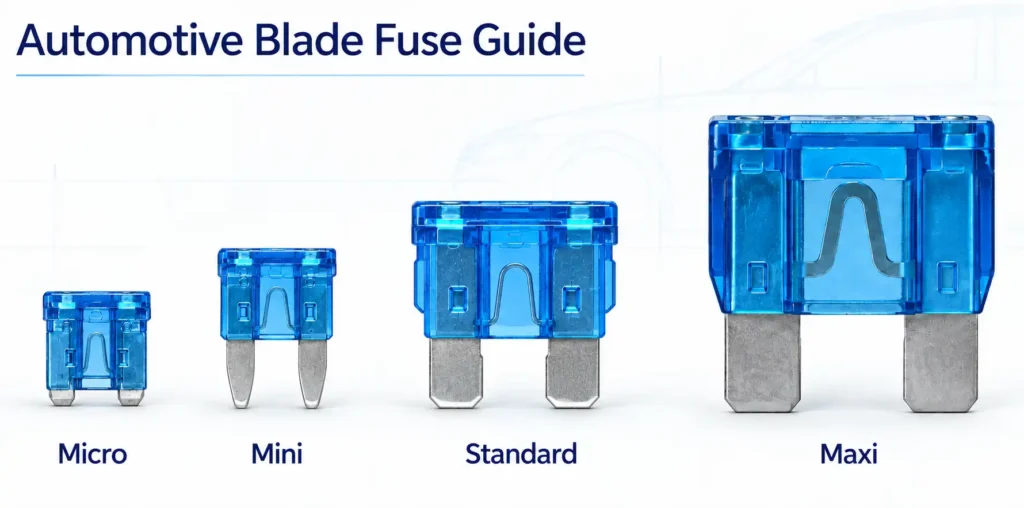
If you are comparing standard, Mini, Micro and Maxi families, use our automotive blade fuse guide rather than trying to decode every acronym independently.
Can ATC and ATO Fuses Fit the Same Holder?
Do not assume compatibility based only on a supplier title. If two products share the same standard blade interface and dimensions, they may be compatible with the same holder, but that decision should be made from the drawing and approved specification.
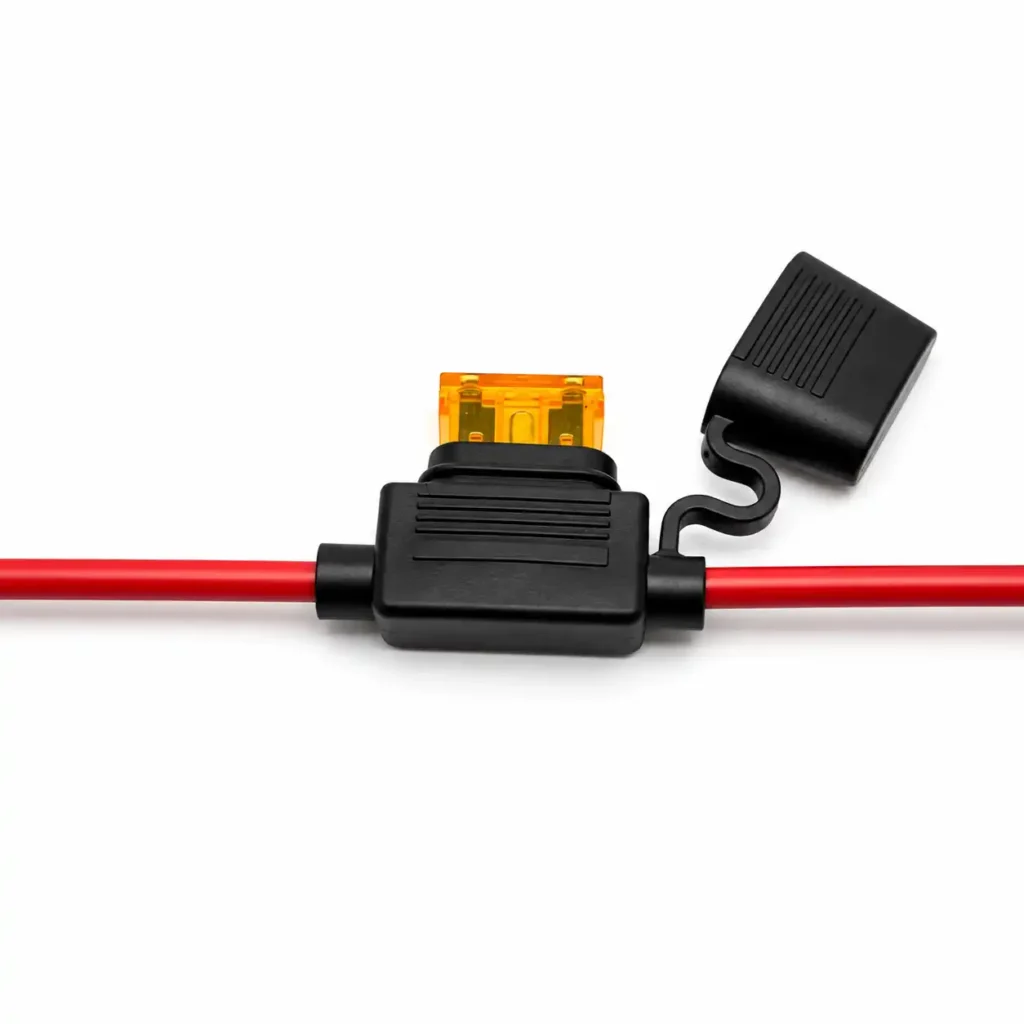
For new assemblies, match the fuse with a dedicated fuse holder rather than forcing a near-fit part into an existing terminal system.
What About ATM, Micro2 and Low-Profile Mini?
ATM is commonly associated with the Mini blade-fuse family, which is physically different from standard-size ATC/ATO products. Micro2 and low-profile formats are also separate. Similar amp markings do not make these fuse families interchangeable.
This is why a B2B RFQ should state the requested fuse type and include a photo, drawing or dimensional reference whenever the naming is ambiguous.
B2B RFQ Checklist for Standard Blade Fuses
- Required fuse format or approved drawing
- Rated current options
- Operating voltage
- Body material if specified
- Fuse-element material if specified
- Dimensions and tolerances
- Performance or test standard required by the project
- Packaging and marking requirements
Browse Cozy Electronics automotive fuse products when comparing standard blade-fuse options for sourcing projects.
Frequently Asked Questions
Does ATC always mean closed and ATO always mean open?
That distinction is used in parts of the market, but supplier terminology is not consistent enough to use as the only purchasing criterion. Confirm the actual construction and drawing.
Is ATM the same as ATC or ATO?
No. ATM is commonly used for Mini blade fuses, which are physically smaller than the standard blade-fuse family.
What information should I put on a purchase order?
Use the exact part number or drawing when possible, together with current rating, voltage, material and any required performance standard.
Conclusion
The practical answer to ATC vs ATO is not to argue over the acronym. For reliable sourcing, compare the fuse drawing, terminal geometry, electrical ratings, performance requirements and holder compatibility.
Understanding ATC vs ATO fuse differences helps buyers select suitable automotive blade fuses and avoid incorrect substitutions.