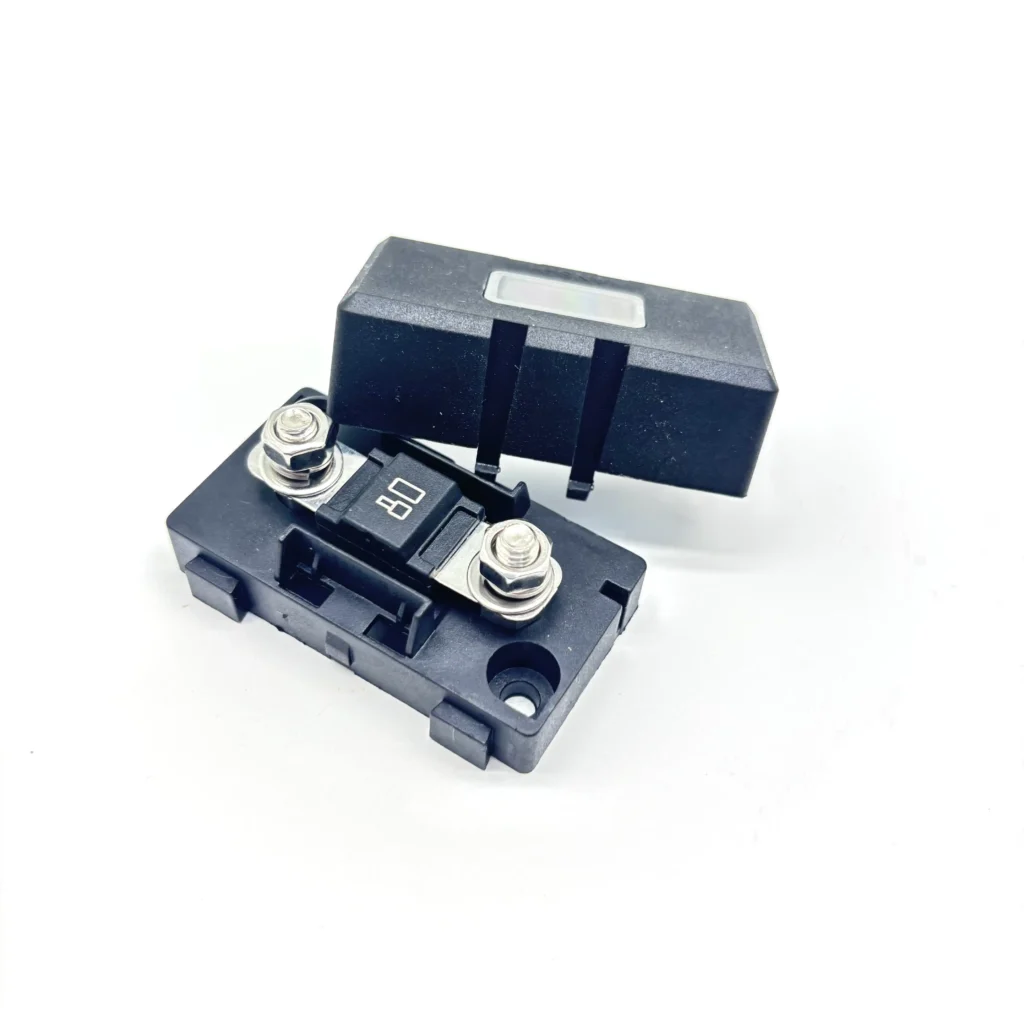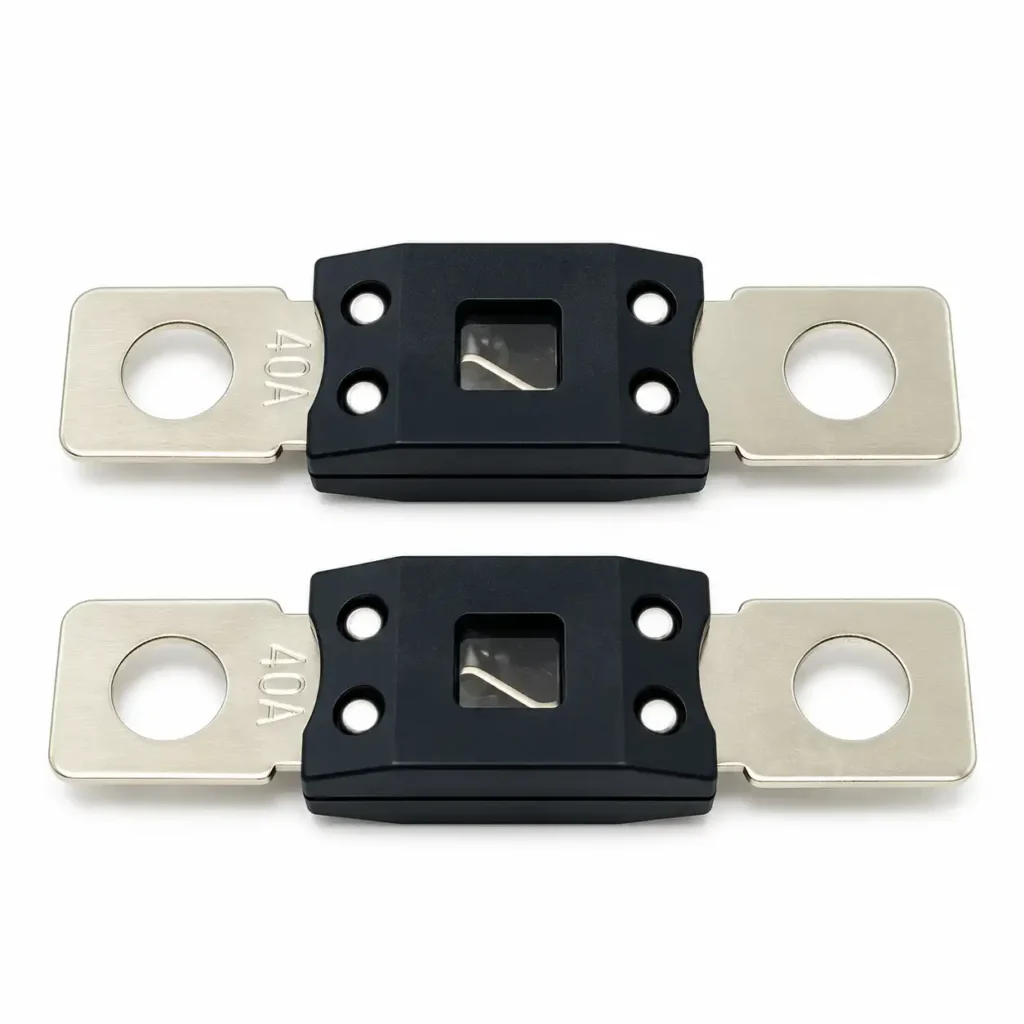
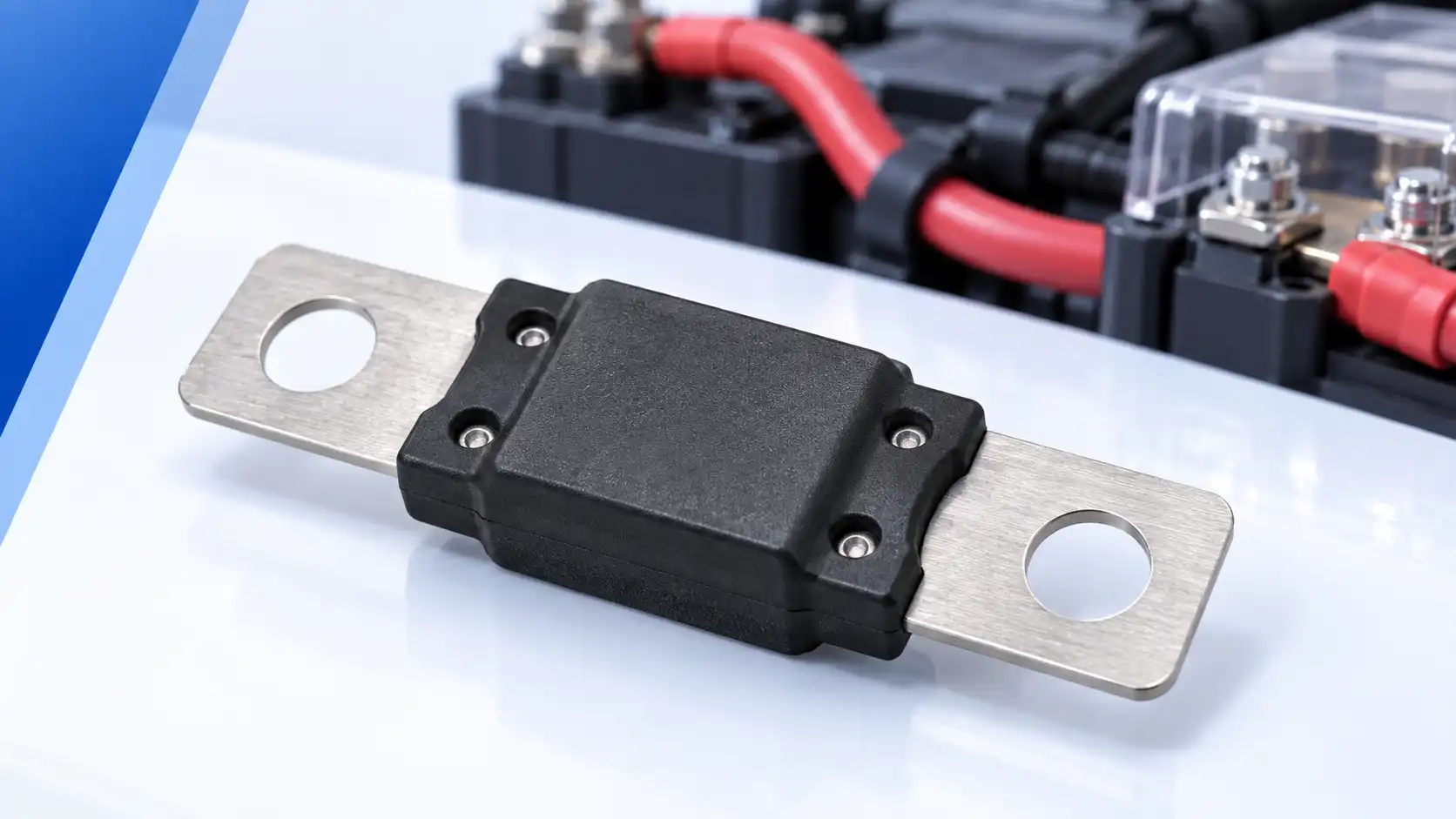
What is a MEGA fuse? A MEGA fuse is a bolt-down fuse used to protect high-current DC wiring against overcurrent. Its two metal terminals fit onto a compatible fuse holder and are secured with nuts. Common applications include vehicle battery circuits, auxiliary power systems, and DC power distribution.
The amp rating is only one part of the selection. A suitable fuse must also match the system voltage, cable capacity, available fault current, and load characteristics. Two fuses with the same amperage are not necessarily interchangeable.
What Is a MEGA Fuse Used For?
A MEGA fuse typically protects a supply cable carrying power from a battery to a distribution block or electrical load.
For example, a damaged battery cable can short against a vehicle’s metal chassis. Without suitable overcurrent protection, the battery may continue feeding the fault and overheat the wiring. A correctly selected fuse interrupts the circuit to help limit that damage.
Typical applications include:
- Vehicle battery-fed distribution circuits.
- Auxiliary battery systems supplying accessories.
- RV DC power distribution.
- Equipment with high-current DC supply cables.
- Inverter installations where the equipment manufacturer specifies a compatible fuse.
Marine applications require additional checks for the installation environment and applicable electrical requirements. A bolt-down connection alone does not establish marine suitability.
The primary protection target is the wiring. The ISO 8820-2 automotive fuse-link guidelines distinguish cable protection from protection of electrical components. A fuse suitable for a supply cable does not automatically protect every sensitive electronic device connected to it.
How Does a MEGA Fuse Work?
Inside the fuse, a metal element carries current between the two terminals. Excessive current generates heat. When enough heat builds up, the element melts and breaks the circuit.
A fuse does not necessarily open the moment current rises above its marked rating. Its operating time depends on the amount of overcurrent and its time-current characteristics.
This matters for equipment that briefly draws extra current during startup. The selected fuse must tolerate normal operation while still protecting the wiring during an overload or short circuit. Check the specific part’s time-current data instead of assuming that all high-current fuses behave alike.
Once a fuse has opened, it must be replaced. Find and correct the cause before restoring power.
How to Choose a MEGA Fuse
Check the Maximum Circuit Voltage
Choose a fuse with a DC voltage rating suitable for the highest voltage it may encounter in the circuit. Include charging conditions when assessing a battery system.
Physical fit does not establish electrical compatibility. Two fuses may fit the same holder while having different voltage ratings. Check the fuse markings and datasheet rather than relying on its shape.
Match the Current Rating to the Cable and Load
Review the equipment’s normal current draw, startup requirements, and recommended protection. Then check the cable’s allowable current under the actual installation conditions.
Cable size matters, but so do insulation rating, ambient temperature, bundling, and routing. The holder and connections must also be suitable for the intended load.
The fuse needs to carry the normal load without leaving the cable inadequately protected. Do not increase its rating simply because the existing fuse keeps opening. Repeated failures may indicate an overload, a wiring fault, excessive heat, or a mismatch between the fuse characteristics and the load.
Verify the Interrupting Rating
The interrupting rating, also called breaking capacity, is the fault current a fuse can safely interrupt at a specified voltage. It is different from its normal current rating.
For example, a 200 A marking does not tell you how much short-circuit current the fuse can safely clear.
The documented interrupting rating must be adequate for the available fault current at the installation point. This is particularly relevant to battery banks capable of supplying high short-circuit currents. Do not assume that a MEGA fuse is suitable for every battery system.
Review Temperature and Startup Conditions
Heat around the fuse can affect its performance. An installation in a hot engine compartment may require different selection considerations from one in a cooler equipment enclosure.
Check the manufacturer’s temperature guidance and any derating requirements. For motors, inverters, or other loads with startup surges, compare the load requirements with the fuse’s operating characteristics.
Confirm the Fuse Holder Fits
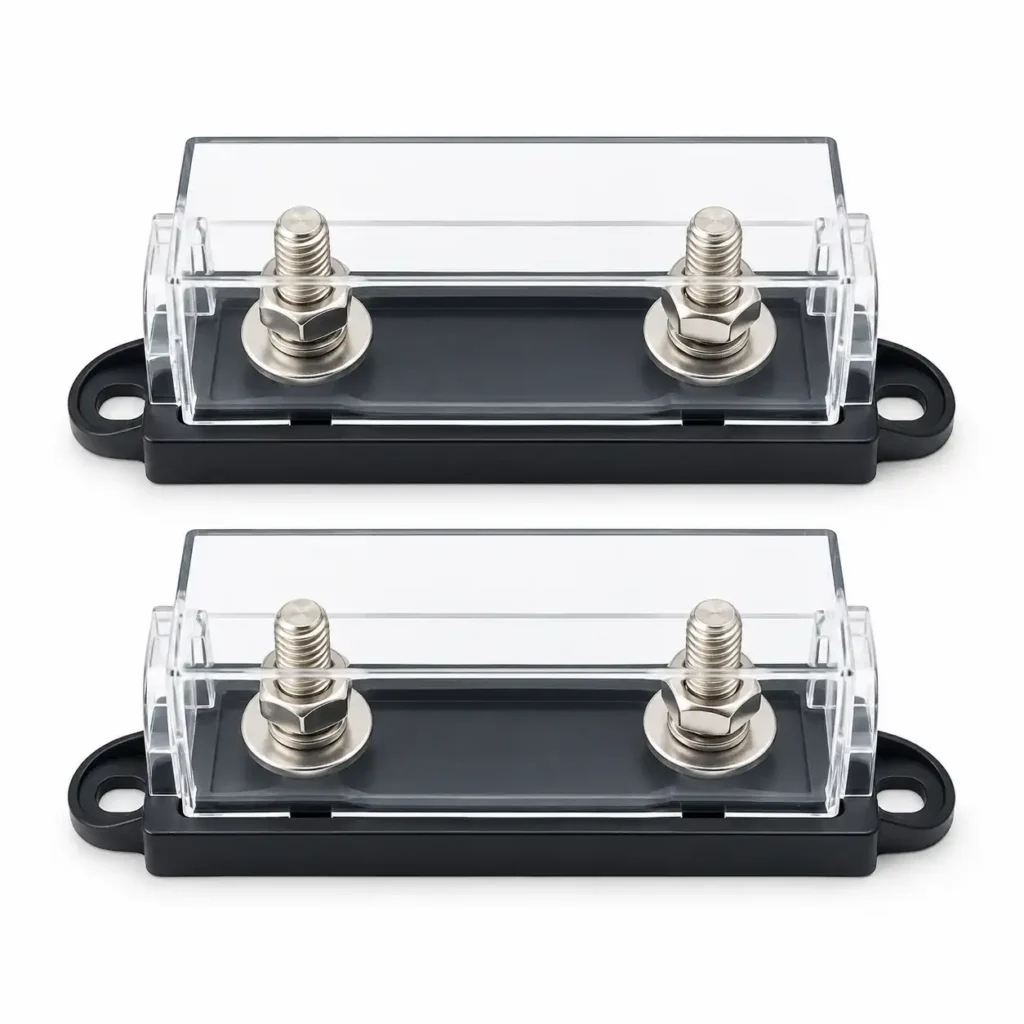
A MEGA fuse holder needs to match the fuse mechanically and electrically.
| Check | What to confirm |
|---|---|
| Mounting dimensions | Fuse hole spacing and body dimensions match the holder |
| Studs and hardware | Hardware fits the terminals and follows the assembly instructions |
| Voltage and current | Holder ratings suit the intended circuit |
| Cable lugs | Lugs fit without strain or interference |
| Tightening torque | Connections follow the manufacturer’s specified torque |
| Cover and enclosure | Protection suits the installation environment |
A cover can reduce accidental contact with live terminals. It does not automatically make the assembly waterproof or establish an IP rating.
Where Should a MEGA Fuse Be Installed?
In a typical battery-fed circuit, install the fuse close to the power source to keep the unprotected cable section short.
The usual arrangement is:
Battery positive → fuse and holder → protected supply cable → distribution block or load
The cable between the battery and the fuse remains outside that fuse’s protection. If this section shorts to the chassis, the downstream fuse cannot interrupt the fault.
A main fuse also does not necessarily protect every smaller wire connected after a distribution block. Branch circuits may require their own fuses, selected for their wiring and loads.
For marine installations, Blue Sea Systems’ discussion of DC main overcurrent protection explains the importance of protection location and installation exceptions. Use it as background, and follow the current requirements applicable to the vessel and the equipment instructions.
Before installation or replacement, isolate all power sources. Follow the specified hardware arrangement and tightening torque, and support heavy cables so they do not pull on the fuse terminals.
MEGA Fuse vs. Blade Fuse
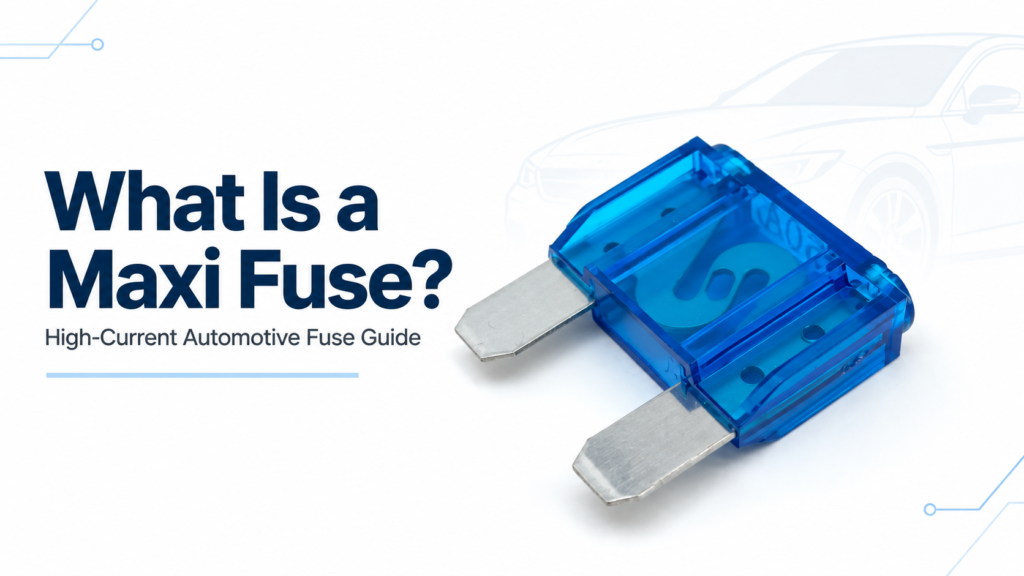
MEGA fuses use bolted connections, while common blade fuses push into matching contacts. They generally serve different positions in a power distribution system.
| Feature | MEGA fuse | Common blade fuse |
|---|---|---|
| Connection | Bolt-down terminals | Push-in blade contacts |
| Typical application | High-current supply circuits | Accessory and branch circuits |
| Holder | Compatible stud-mounted holder | Matching blade-fuse socket or block |
| Replacement | Securing hardware must be removed | Usually removed with a fuse puller |
| Selection checks | Ratings, response, dimensions, and holder compatibility | Ratings, response, blade format, and holder compatibility |
Choose according to the circuit requirements and the specific fuse data. A larger physical size or a bolted connection does not, by itself, make a fuse the right choice.
Common Installation Problems
Heat Around the Terminals
Loose hardware, poor crimps, corrosion, or incorrect assembly can create resistance at a connection. This can produce local heating even when the circuit current is below the fuse rating.
Discoloration, softened plastic, or damaged insulation should be investigated before the circuit is used again. Replacing the fuse alone will not correct a poor connection.
Repeated Fuse Failures
Check for overloads, damaged wiring, unusual startup current, and excessive ambient heat. Confirm that the installed fuse matches the equipment requirements.
Fitting a larger fuse without checking the cable and circuit can leave the wiring inadequately protected.
An Incompatible Holder
A holder that looks similar may have different spacing, terminal support, or electrical ratings. Confirm the drawing and specifications before ordering replacement parts.
The fuse should fit without forcing the terminals into position. Cable lugs and covers should also have enough clearance for correct assembly.
Insufficient Environmental Protection
An exposed installation may need protection against moisture, contamination, or accidental contact. Select the enclosure for the location and verify any claimed protection rating.
Frequently Asked Questions
What is a MEGA fuse, and is it resettable?
A MEGA fuse is a bolt-down overcurrent protection device for high-current DC circuits. It is not resettable. Once its element opens, replace the fuse after resolving the fault.
Can I use a MEGA fuse with a lithium battery?
Possibly, but compatibility depends on the system voltage, available fault current, and the fuse’s documented ratings. Follow the battery and equipment manufacturers’ protection requirements rather than choosing by battery chemistry or amperage alone.
Can I use a MEGA fuse for an inverter?
Use one only if its specifications meet the inverter manufacturer’s requirements. Check the recommended fuse type, cable size, continuous load, startup surge, and required interrupting rating.
Can I replace a MEGA fuse with another fuse of the same amperage?
The same amperage is not enough. Also compare voltage rating, interrupting rating, time-current characteristics, mounting dimensions, and holder compatibility.
What information is needed for a quotation?
Provide the system voltage, required fuse rating, application, quantity, and whether a holder is needed. Include a drawing or existing part number if available, along with any required interrupting rating or qualification documents.
Find a MEGA Fuse for Your Application
View the Cozy Electronics MEGA fuse product page when reviewing options for your project.
For a quotation, send your application details, required quantity, and any existing fuse or holder drawing. Include the electrical ratings your design requires so we can check the requested specifications.