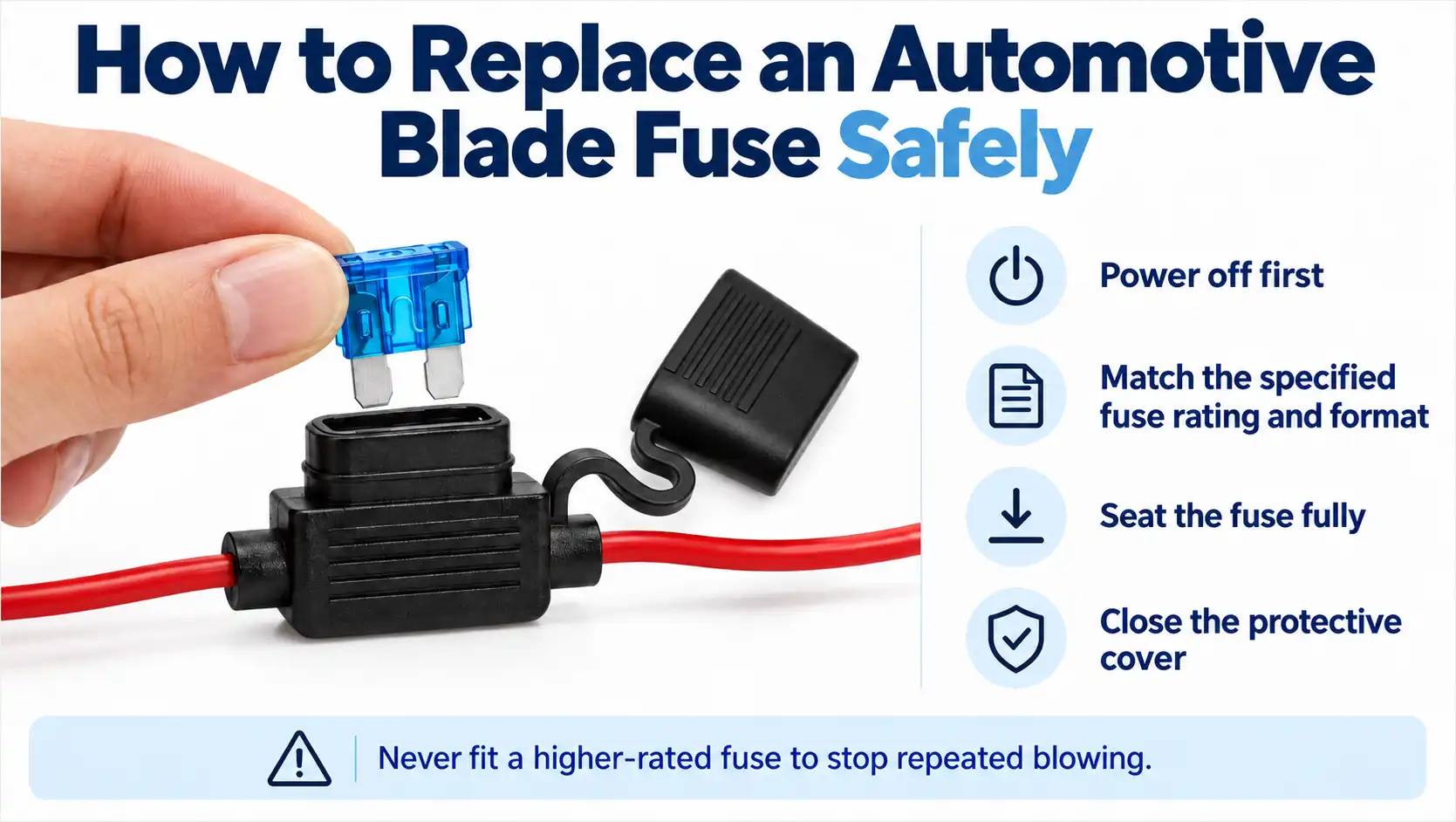
Automotive blade fuse replacement should start by confirming the original fuse format and rating, following the vehicle’s power-down instructions, and inspecting the fuse slot for heat or damage.
A fuse replacement should be simple when the circuit is healthy. If the new fuse opens again, do not continue replacing fuses; diagnose the circuit instead.
Automotive Blade Fuse Replacement: Before You Start
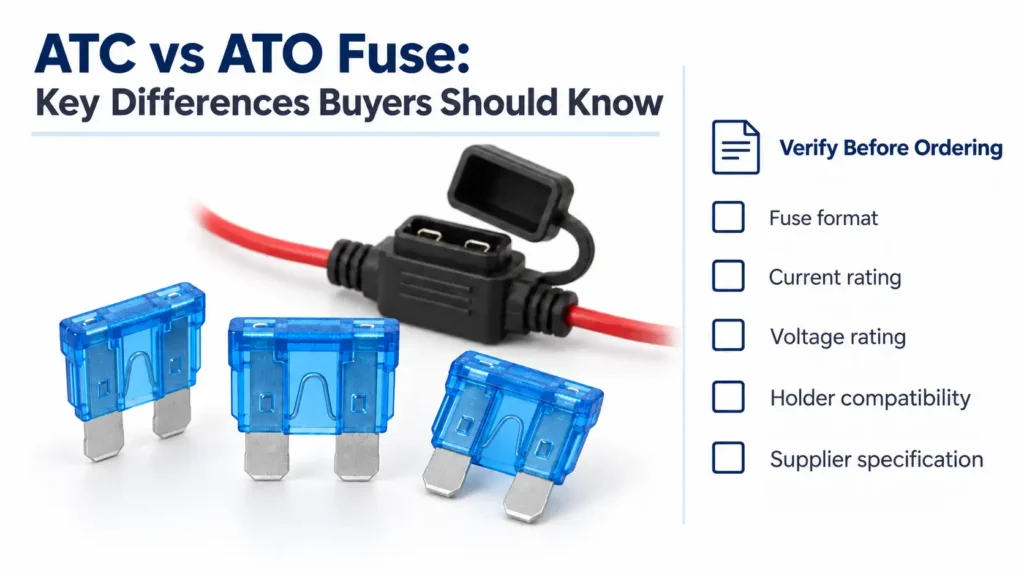
Before you replace an automotive blade fuse, confirm the fuse format, current rating and voltage requirement.
- Check the vehicle owner’s or service information.
- Identify the correct fuse box and circuit.
- Use the specified fuse rating and physical format.
- Do not substitute a higher amp fuse.
- Do not bypass the fuse with wire or metal.
Step 1: Identify the Correct Fuse
Read the fuse-box diagram or service information and confirm the circuit. If the fuse is part of an aftermarket installation, check the equipment documentation and wiring design.
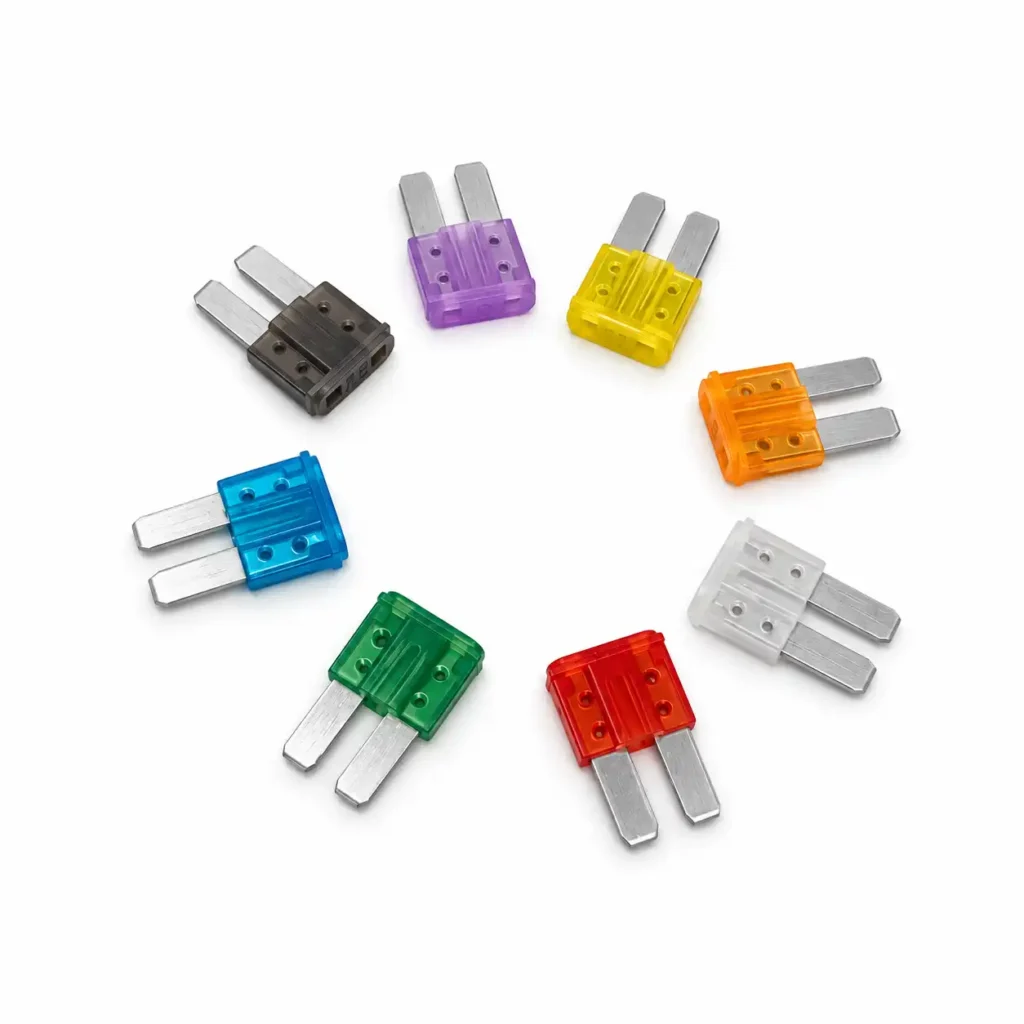
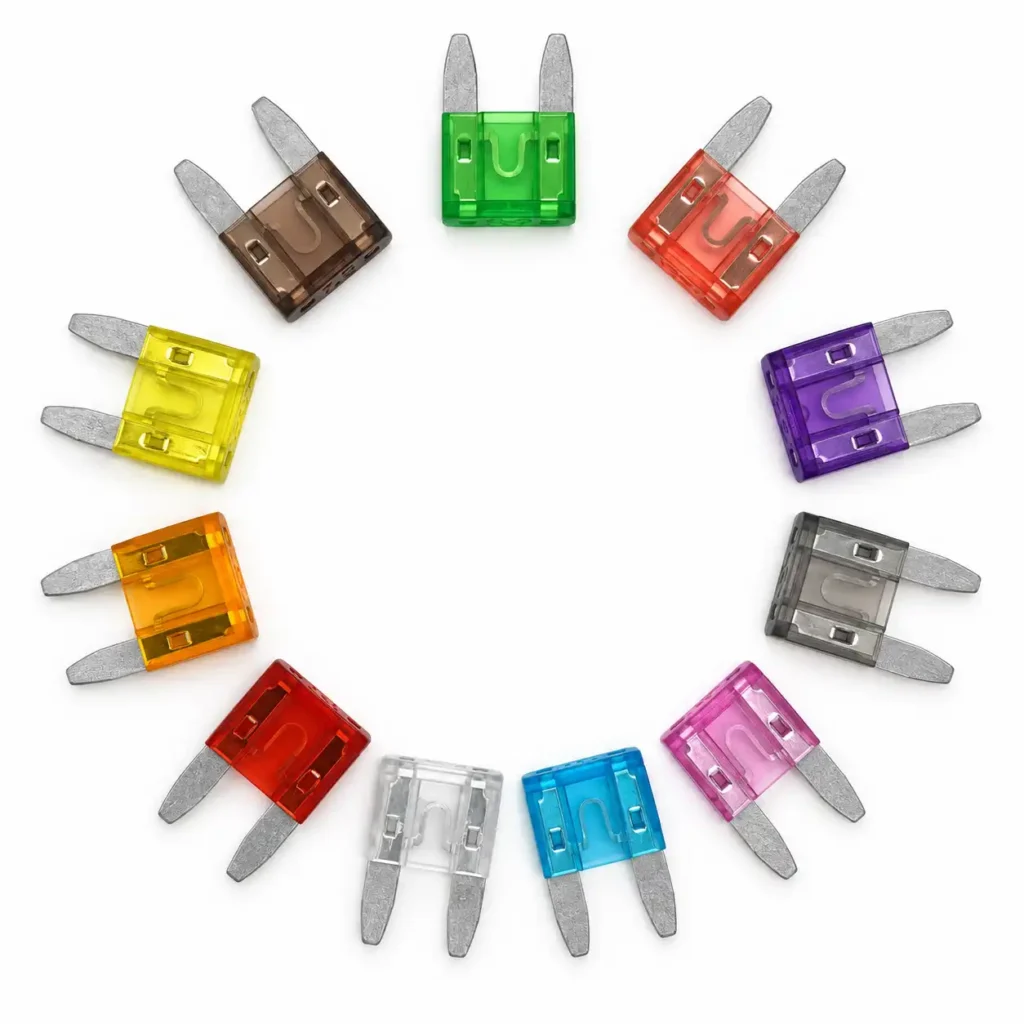
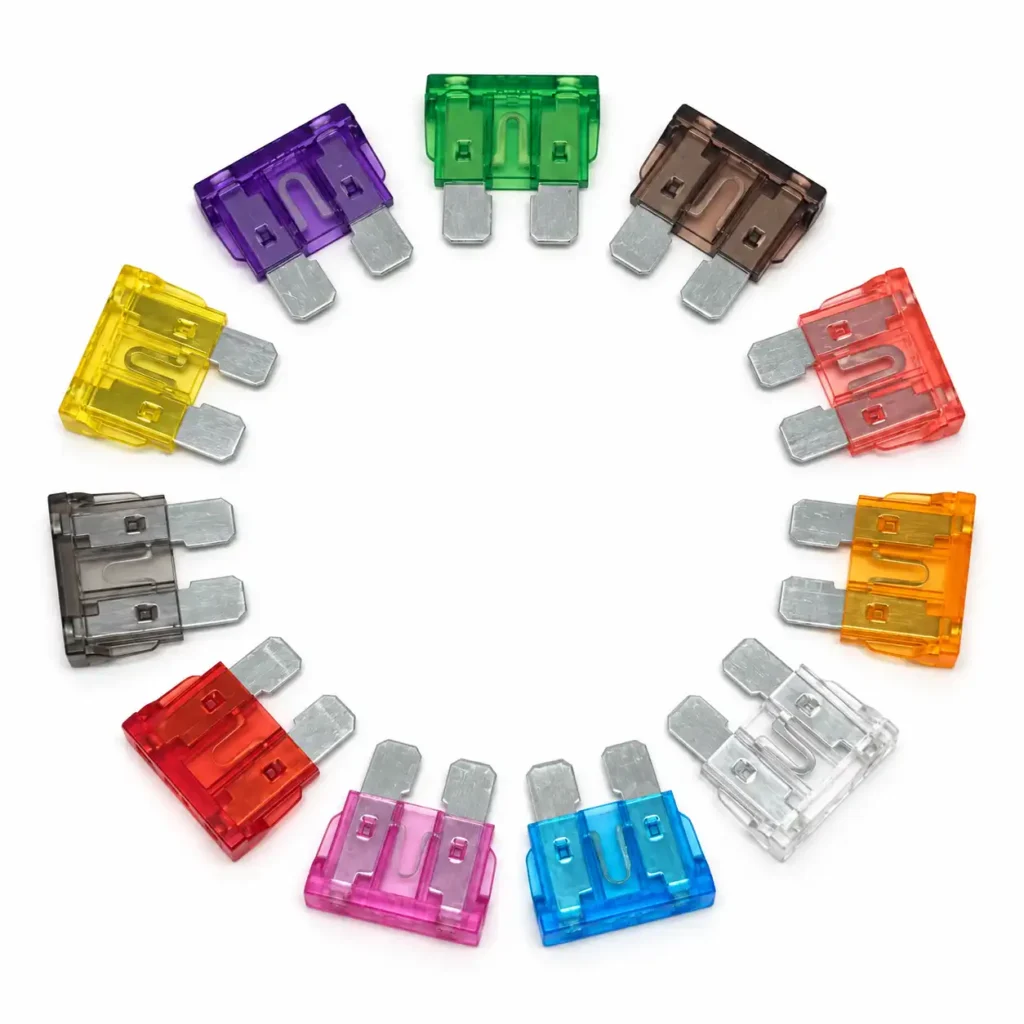
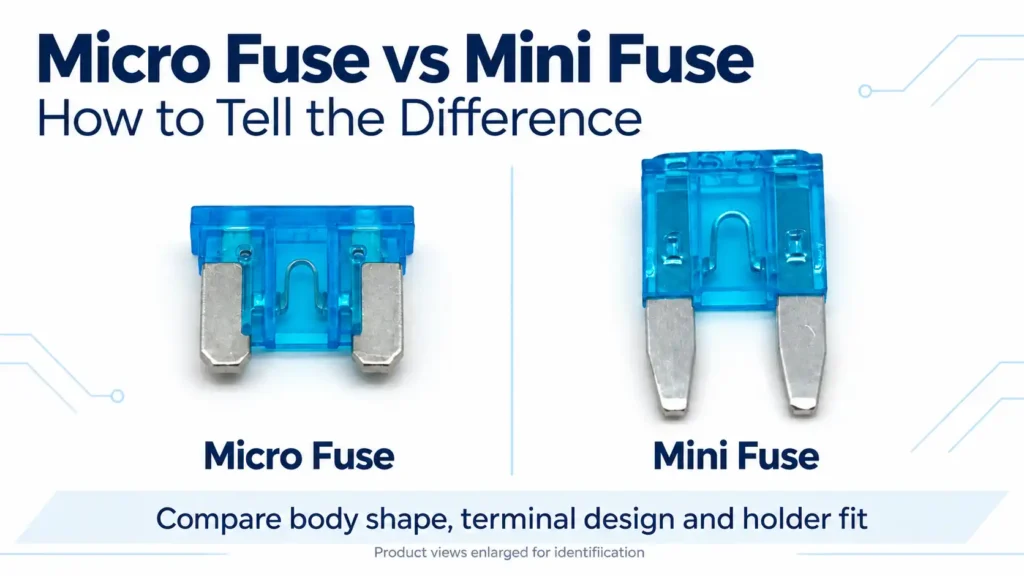
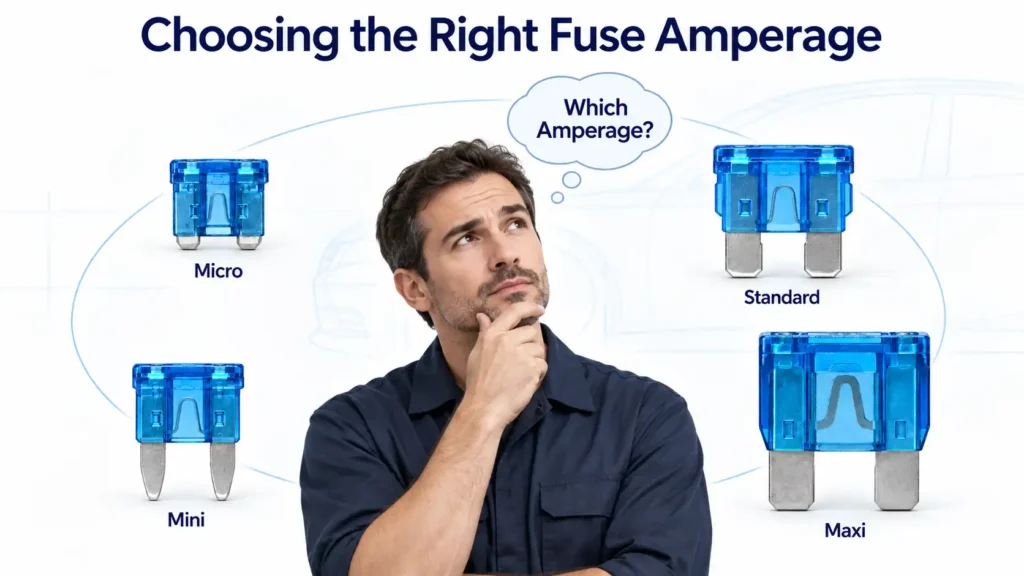
If you are unsure whether the fuse is Micro, Mini, Standard or Maxi, use our automotive blade fuse guide before ordering a replacement.
Step 2: Power Down the Circuit
Switch off the vehicle and follow the manufacturer’s procedure for the circuit being serviced. Some vehicles contain electronic systems that require specific handling, so the service information takes priority over a generic fuse-replacement guide.
Step 3: Remove the Fuse Without Damaging the Slot
Use the fuse puller supplied with the vehicle or an appropriate insulated tool. Pull straight and avoid twisting the fuse in a way that can damage the terminal contact.
Step 4: Inspect the Fuse and Holder
When you replace an automotive blade fuse, inspect the fuse holder for discoloration, looseness or heat damage.
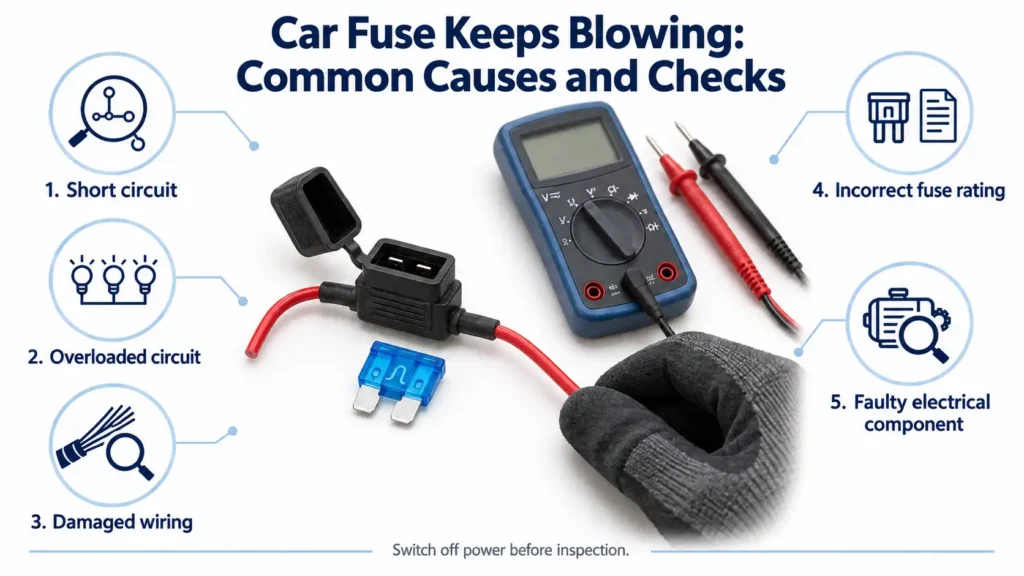
Stop and investigate if you see:
- discoloration;
- melted or softened plastic;
- corrosion;
- loose terminals;
- damaged wiring.
A melted holder should not be treated as a normal fuse replacement. See our article on repeated fuse failures and overheated connections.
Step 5: Match Format, Amperage and Voltage
The replacement should match the approved fuse format and current rating. Voltage compatibility must also be confirmed.
ISO 8820-3:2026 addresses performance and dimensional requirements for several road-vehicle blade fuse types within its scope, while SAE J1284 describes blade-type fuses used to protect wiring and equipment in vehicles, boats and trailers.
Step 6: Install the Fuse Fully
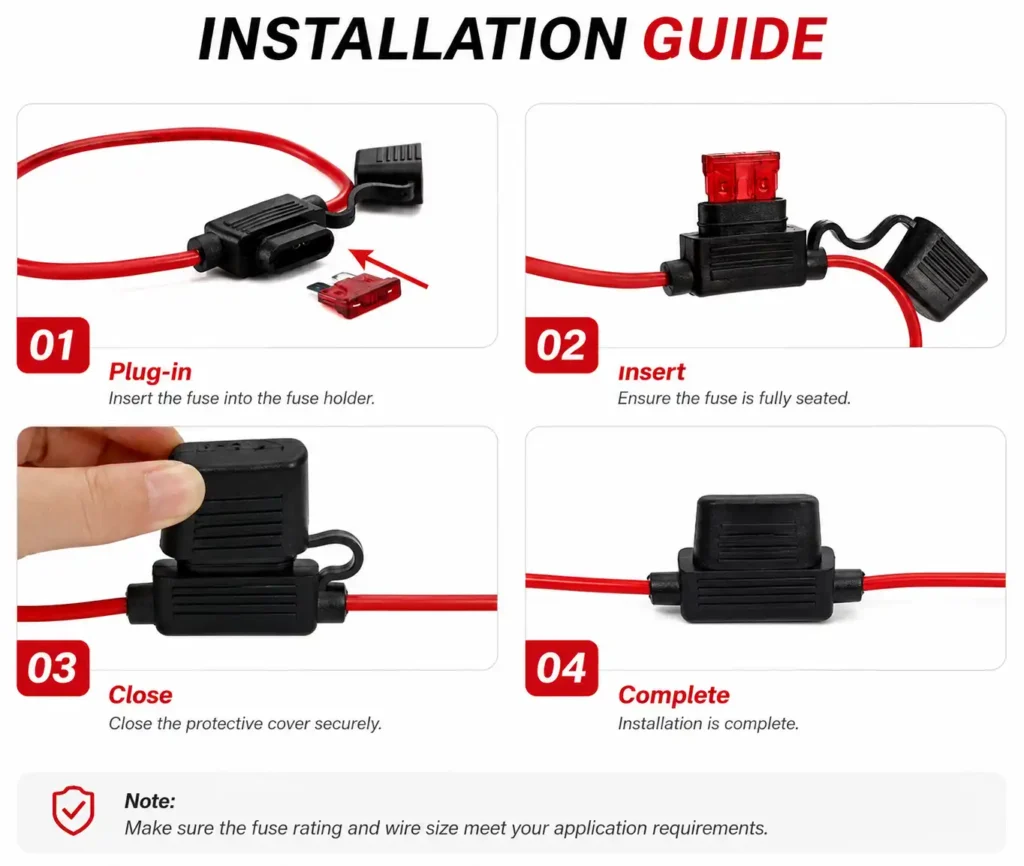
Insert the fuse straight into the correct slot. It should seat firmly without being forced. If the fuse is obviously the wrong width, blade spacing or body height, stop and re-check the fuse family.
Step 7: Restore Power and Verify Operation
Follow the vehicle procedure to restore power and test the circuit. If the fuse opens again, the correct next step is diagnosis—not a larger fuse.
Replacing a Fuse When Adding an Accessory
Accessory installations create an additional selection step because the fuse tap must match the vehicle’s original fuse format. Cozy Electronics offers automotive fuse taps for different blade-fuse families.
The added circuit should have appropriate protection and wiring for its own load. Do not assume that an empty fuse-box slot or convenient existing circuit is automatically suitable for an accessory.
When Should a Fuse Holder Be Replaced?
Replace the holder or fuse-box terminal system if there is heat damage, loss of contact force, corrosion or physical deformation. For inline applications, choose a fuse holder designed for the selected fuse family and circuit requirements.
Frequently Asked Questions
Can I use a higher amp fuse temporarily?
No. Use the specified protection value unless the circuit has been formally redesigned and approved.
What if the replacement fuse does not fit?
Do not force it. Confirm whether the vehicle uses Micro, Micro2, Mini, low-profile Mini, Standard or another fuse format.
What if the new fuse blows immediately?
Stop replacing fuses and diagnose the circuit for a short, wiring error, overload or component fault.
Conclusion
A correct fuse replacement matches the original format and rating and includes a quick inspection of the fuse-box connection. If the problem repeats, treat it as an electrical fault rather than a fuse problem.
Knowing how to replace an automotive blade fuse correctly helps prevent incorrect fuse selection and repeated electrical problems.