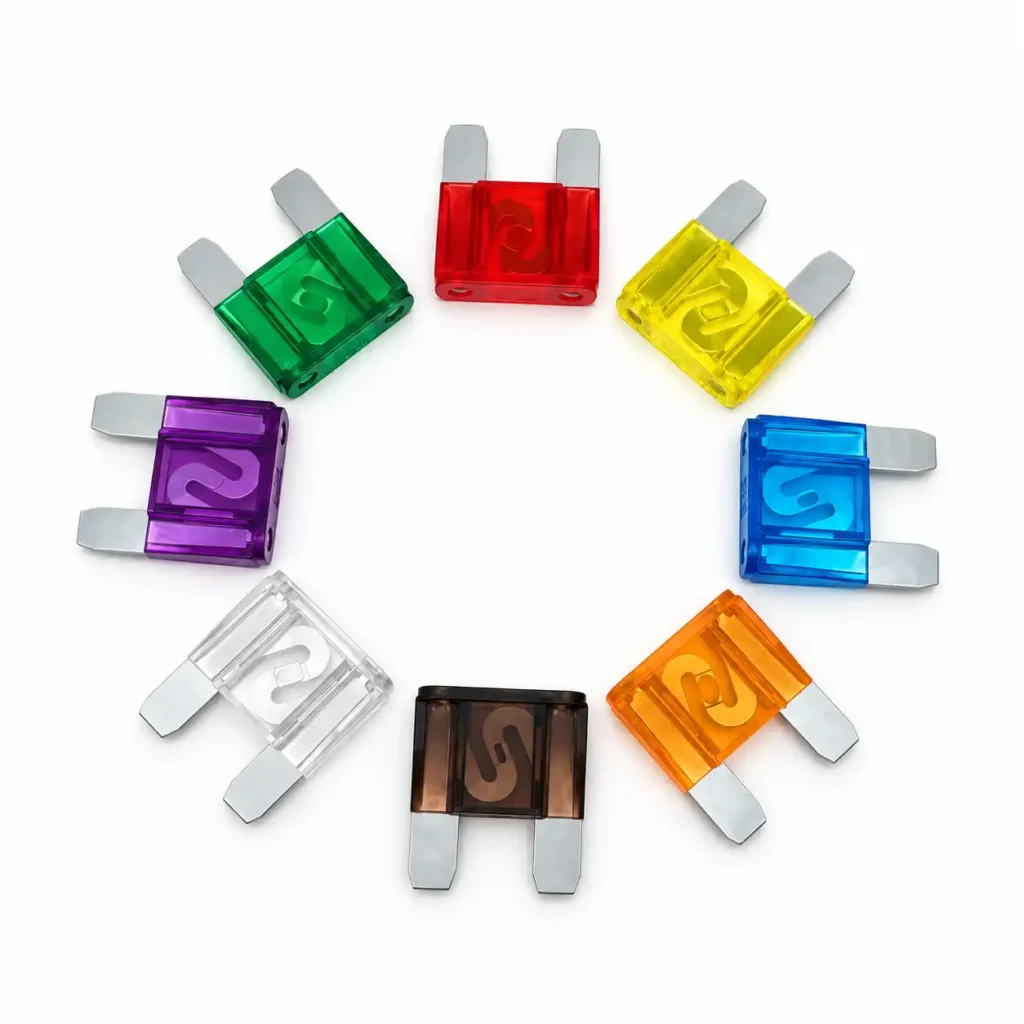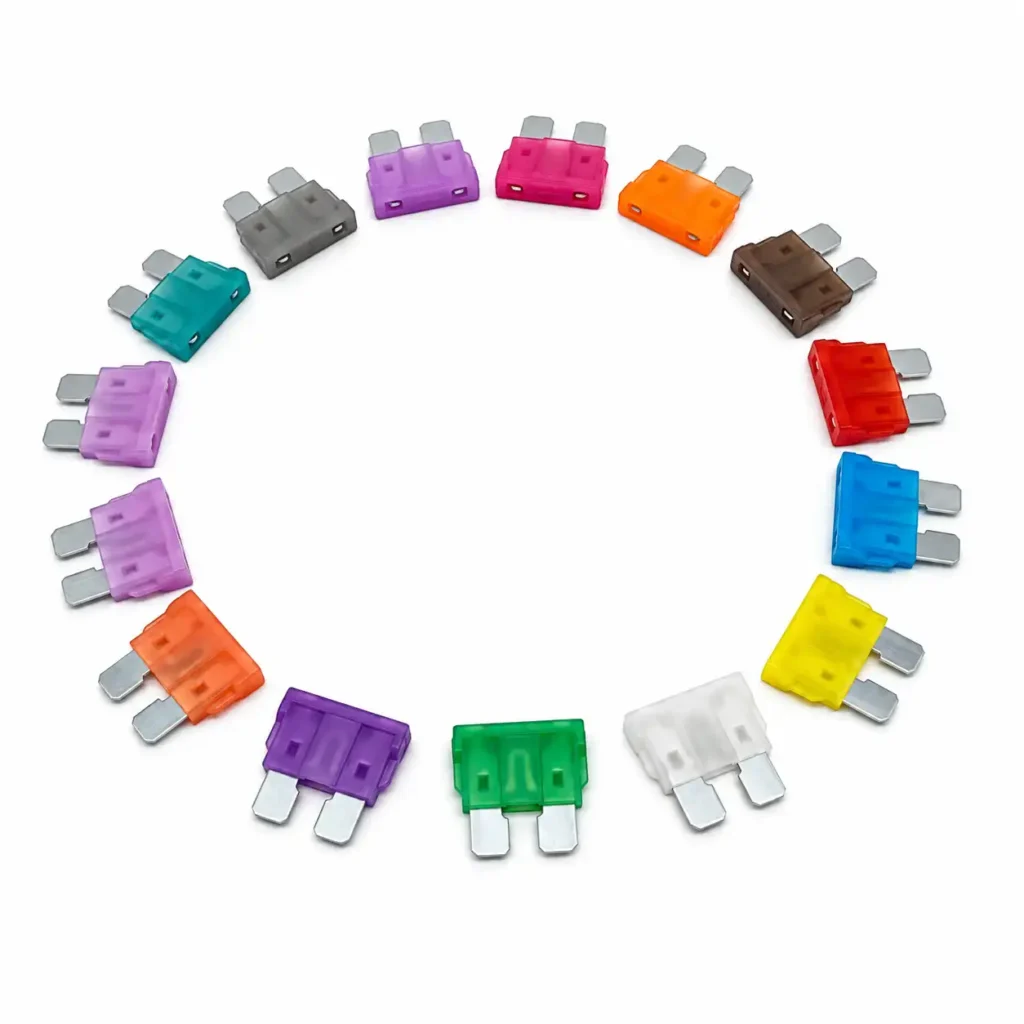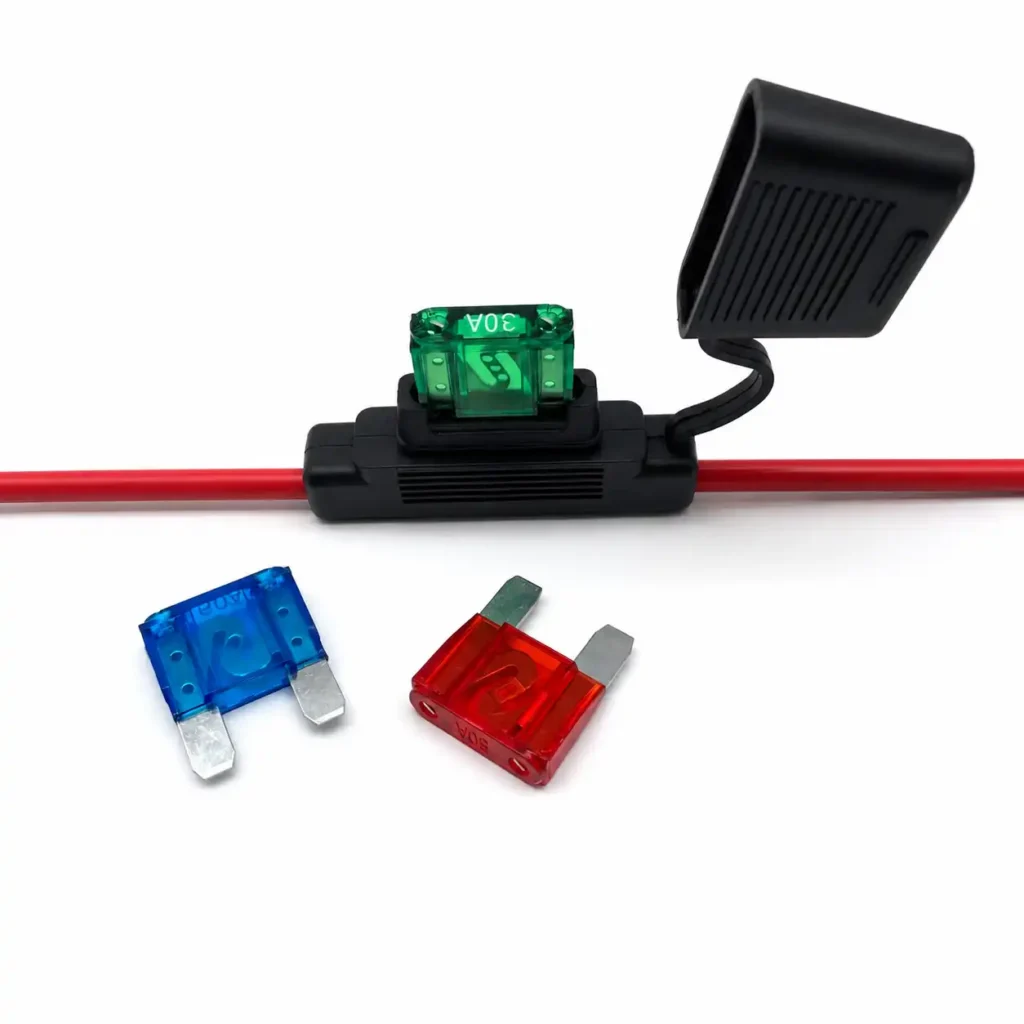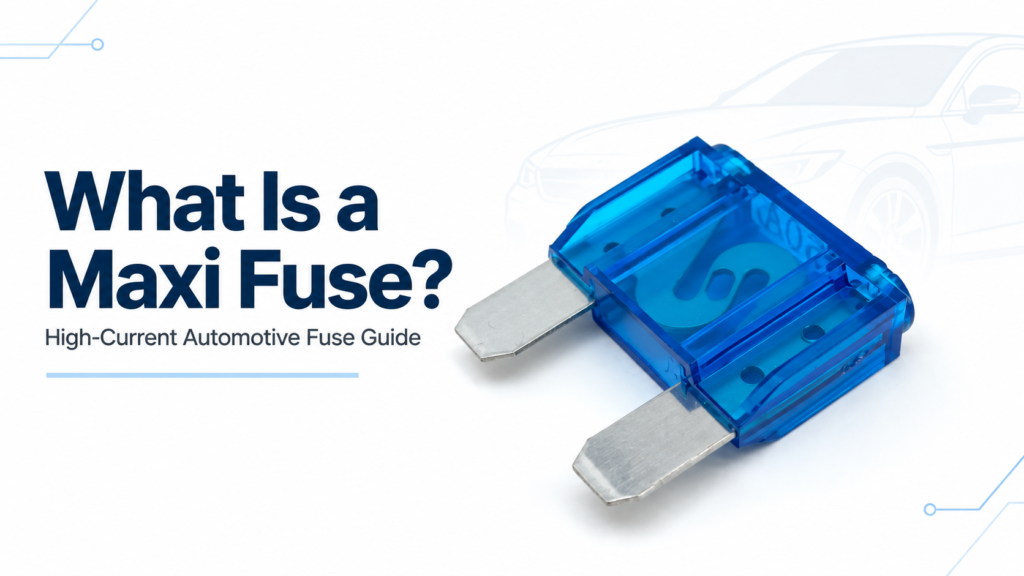
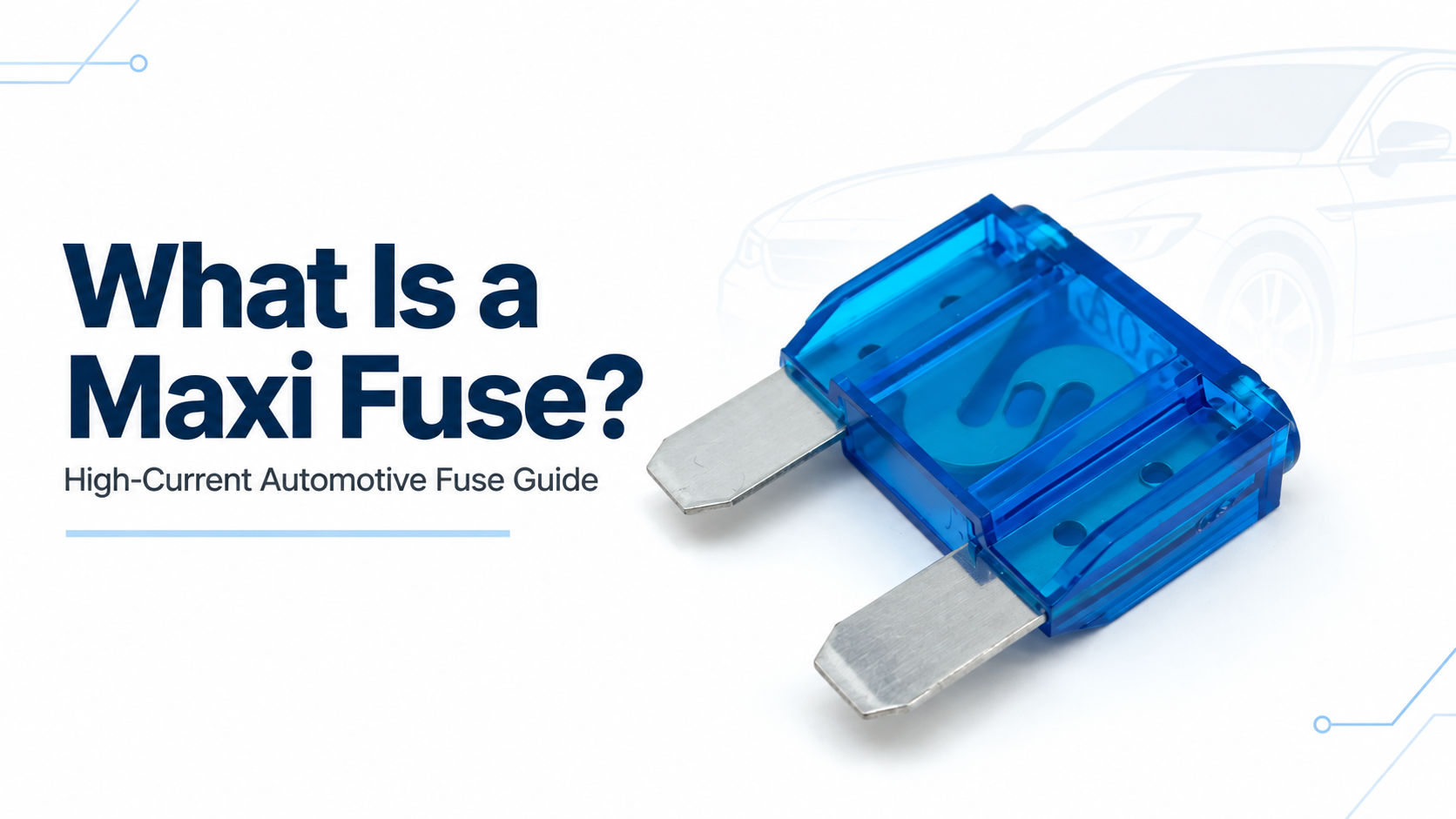
A Maxi fuse is a larger automotive blade-fuse format used where the circuit requires a higher-current blade-fuse solution than compact Micro or Mini families. Its larger body and terminal format distinguish it mechanically from smaller automotive blade fuses.
Maxi fuses are often found in vehicle power-distribution and other higher-current circuits, but they should still be selected from the actual circuit requirements rather than treated as a universal upgrade.
Quick Answer: What Is a Maxi Fuse Used For?
Maxi fuses are commonly used for higher-current vehicle circuits such as power-distribution feeds and larger electrical loads. The exact current range and voltage depend on the specific product design, so always verify the datasheet.
How Is a Maxi Fuse Different From Standard or Mini Fuses?
| Feature | Mini / Standard Blade Fuse | Maxi Fuse |
|---|---|---|
| Relative size | Smaller | Larger |
| Typical role | Low-to-moderate current branch circuits | Higher-current vehicle circuits |
| Holder | Requires matching family | Requires dedicated Maxi-compatible holder |
| Interchangeable? | No — different physical formats | |
For the full family comparison, see our automotive blade fuse guide.
Maxi Fuse Standards and Scope
ISO 8820-3:2026 includes a high-current Type E blade fuse-link category and specifies rated-current, test, performance and dimensional requirements within the standard’s stated voltage/current scope. SAE J1284 is another blade-fuse reference used historically for motor vehicles, boats and trailers.
These documents are technical background. They should not be interpreted as a claim that every Maxi product meets a particular standard unless that specific product is documented accordingly.
Where Are Maxi Fuses Commonly Used?
- vehicle power-distribution circuits;
- battery-fed accessory circuits;
- commercial vehicle electrical systems;
- higher-current aftermarket equipment;
- DC distribution assemblies.
High-current vehicle circuits should be evaluated as a complete protection system rather than by fuse rating alone. The conductor size, terminal quality, holder design, operating voltage and expected electrical load all affect the final component selection. For OEM and aftermarket projects, buyers should review the fuse together with its mating holder and wiring requirements before approving the application.
How to Choose a Maxi Fuse
1. Confirm the Required Current Rating
Use the circuit design or equipment specification. Do not choose the rating from the physical size of the fuse.
2. Confirm System Voltage
Maxi products can be offered for different voltage applications. Verify the actual fuse specification.
3. Match the Holder
A Maxi fuse requires a compatible fuse holder or fuse-box terminal system. Contact quality is critical in higher-current circuits.
4. Check the Wiring and Connections
Higher-current circuits are sensitive to connection quality. Loose or high-resistance connections can generate local heat even if the fuse itself does not open.
5. Review the Entire Protection Path
The fuse, holder, conductor, terminals and load must work as a system. See our automotive fuse amperage guide before changing a fuse value.
Why Can a Maxi Fuse Holder Melt?
Community troubleshooting frequently points to poor connections, loose terminals, unsuitable holders or wiring issues when a fuse holder overheats. A melted holder is not normal and should be replaced after the root cause is corrected.
Maxi Fuse vs Battery Disconnect Switch
A fuse and a disconnect switch serve different functions. The fuse provides overcurrent protection; a battery disconnect switch provides intentional circuit isolation. One should not be treated as a substitute for the other.
Frequently Asked Questions
Is a Maxi fuse always 100A or 120A?
No. Available ratings vary by product series. Use the actual product specification.
Can I replace a Standard fuse with a Maxi fuse?
Not as a direct replacement. They are different physical formats and the circuit must be designed for the selected fuse and holder.
Why is my Maxi fuse holder hot?
Check for loose or damaged connections, unsuitable holder components, excessive current and wiring issues. Heat damage should be investigated before continued use.
Conclusion
Maxi is a high-current automotive blade-fuse format, but safe selection still depends on the circuit rating, system voltage, wiring and holder. Treat the fuse and holder as part of one engineered protection path.